Katamtaman
Moroccan
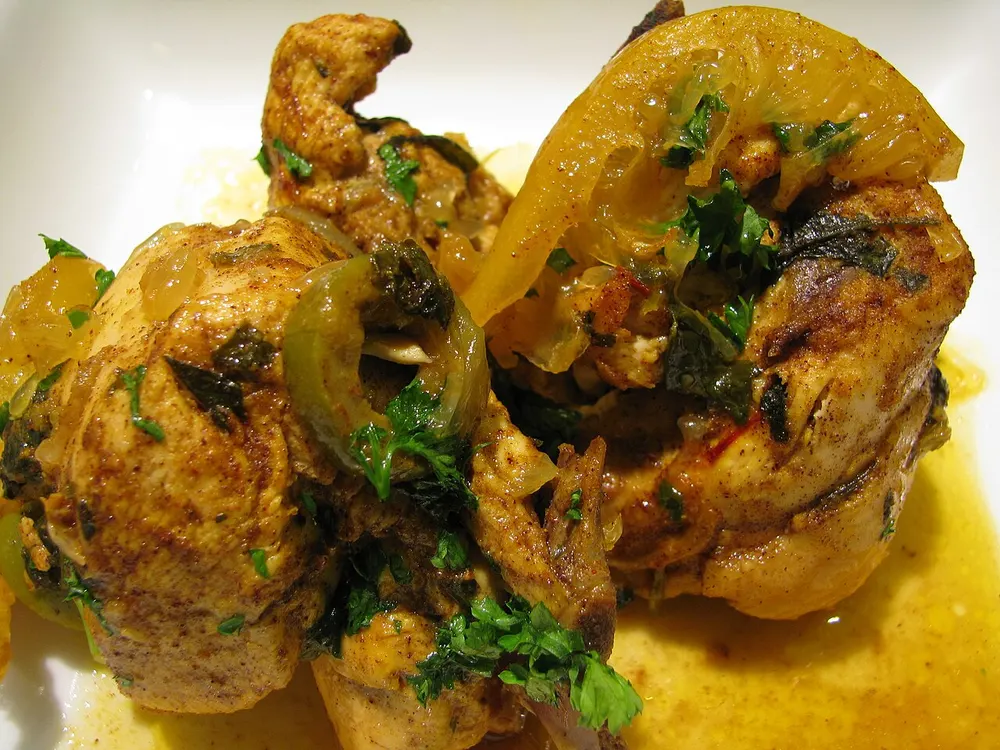
Chicken Tagine with Olives and Lemon
Pinagmulan: Traditional
90 min4420 kcal
HalalWalang glutenWalang gatas
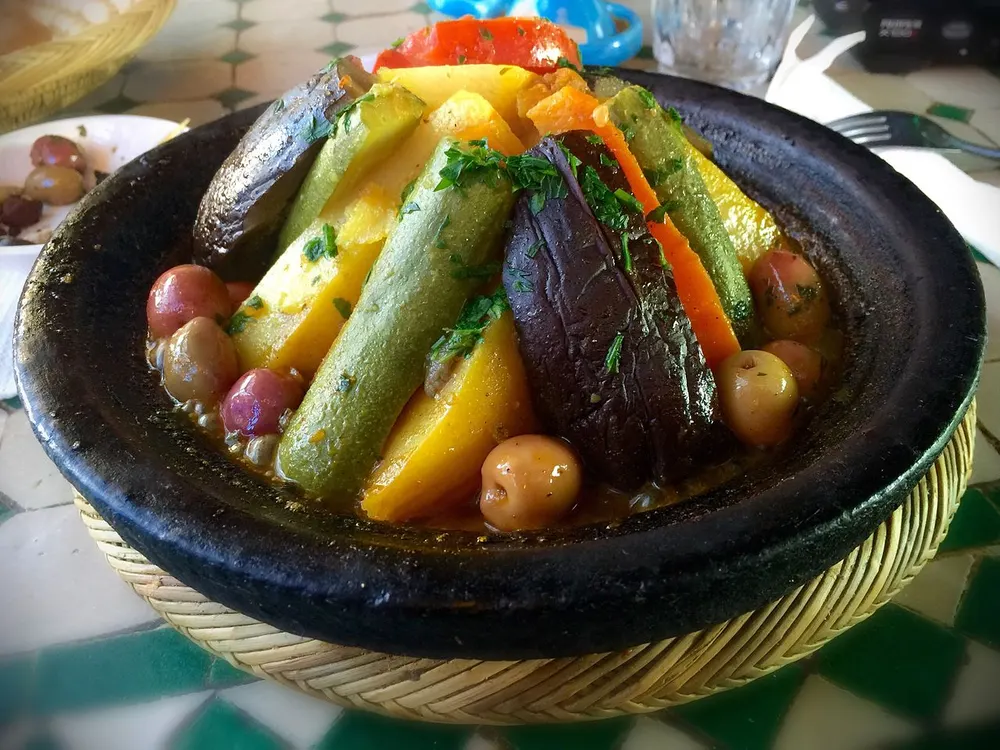
Seasonal vegetables stood up in a cone around a wet, spiced onion base and steamed until tender — a naturally vegan tagine built on how the vegetables are stacked, not on stock.
Pinagmulan
Recipe ni Moroccan home kitchens · 🏺 Traditional · Moroccan household cooking
Moroccan home cooking — The tagine is the everyday cooking vessel and dish of Morocco, and a vegetables-only version is standard home cooking, not a modern invention. The method — a wet, spiced onion base with the vegetables stood up in a cone and steamed under the lid — is the same whatever goes in the pot. There is no single author; the vegetables follow the season and the market.
Karagdagang impormasyon sa Wikipedia ↗
Panoorin habang niluluto · 3 na video
Spread the sliced onions over the base of a wide pot, pour over the oil, and scatter on the garlic, all the spices and the grated tomato.
Now build the cone: stand the carrots, potatoes and turnip upright in the centre, leaning together, with the softer courgette added around the outside.
💡 Standing them in a peak is not just for looks — the harder roots sit at the hot centre and the quick-cooking courgette rides the cooler outside, so everything finishes together.
Season with the salt, pour the water gently down the side, cover and cook over low heat for 40 minutes.
Do not stir. Let the vegetables steam in place so they hold their shape rather than collapsing into a mush.
💡 Stirring is the instinct to resist. A tagine is layered on purpose; a spoon through it turns a handsome cone into vegetable soup.
Check a potato with a knife; when it slides in easily, scatter over the olives and the chopped herbs and cook 5 minutes more.
Serve from the pot with khobz. The vegetable juices and oil at the bottom are the sauce — spoon them up.
Moroccan
Pinagmulan: Traditional
Egyptian
Pinagmulan: Home cook
West African / Nigerian
Pinagmulan: Traditional
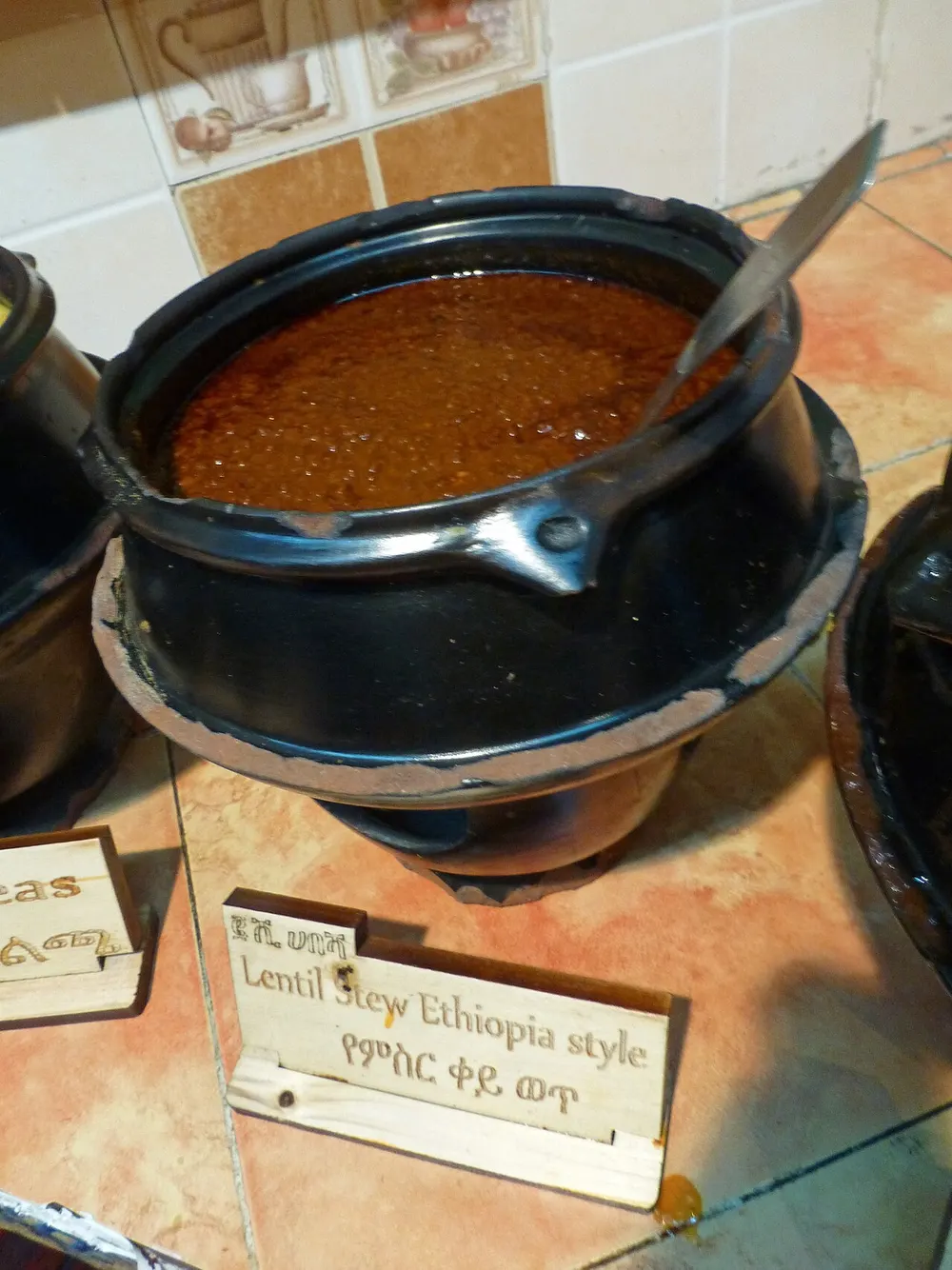
Ethiopian
Pinagmulan: Home cook
Niluto mo? Magbahagi ng larawan sa Showcase.
Ibahagi ang niluto mo →