Baguhan
Korean
Kimchi Jjigae (Kimchi Stew)
Pinagmulan: Traditional
30 min3420 kcal
Walang gatas🌶️🌶️
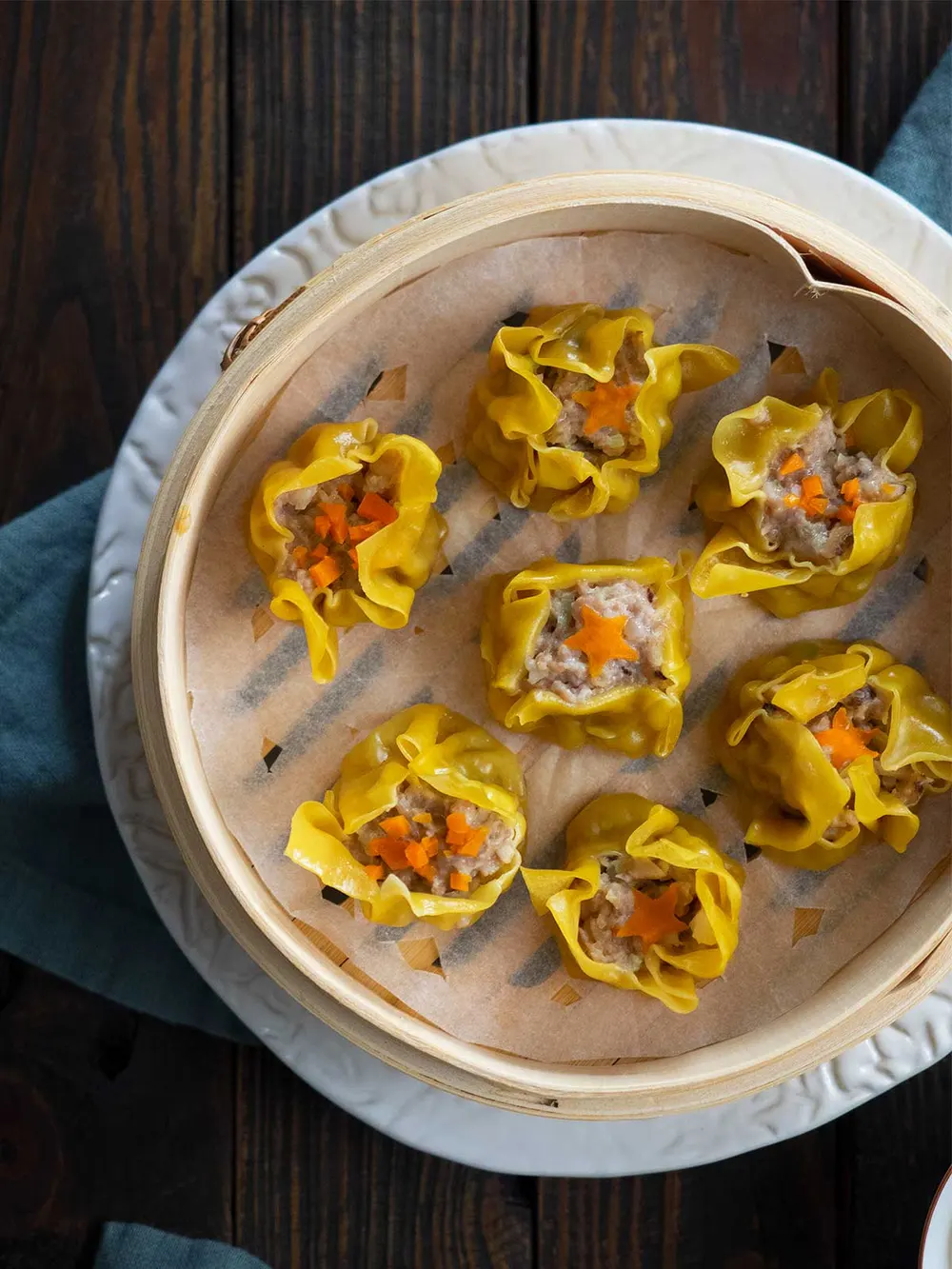
Pork and prawn packed into a yellow wrapper left open at the top, cinched into a little barrel and dotted orange — the har gow's inseparable partner on every dim sum trolley.
Pinagmulan
Recipe ni Cantonese dim sum kitchens · 🏺 Traditional · A teahouse snack that spread across China and beyond — no single author
Cantonese dim sum / 廣東點心 — The name shaomai originally meant something like 'sold as a sideline' — it was served in tea houses as a secondary offering alongside the tea, and merchants from Shanxi are credited with carrying it to Beijing and Tianjin, from where it spread widely. The Cantonese siu mai is the version most people know: ground pork with whole or chopped shrimp, black mushroom, scallion and ginger in a thin yellow lye-water wrapper, finished with an orange dot of crab roe or diced carrot.
Karagdagang impormasyon sa Wikipedia ↗
Panoorin habang niluluto · 3 na video
Soak the shiitake in warm water for 30 minutes until fully soft, then squeeze them out, cut off the woody stems and dice the caps small. Save 30 ml of the soaking liquid.
💡 Strain that liquid through a coffee filter or let the grit settle and pour off the top — the bottom of the bowl is where the sand from the mushrooms ends up.
Chop the pork shoulder by hand with a heavy knife until it is coarsely minced but still shows visible pieces — not a paste.
💡 Machine mince is pressed through a plate, which crushes the fibres and gives a spongy, uniform bounce. Hand-chopped pork stays in shreds you can feel, and it is the reason a good siu mai eats meaty rather than rubbery.
Put the pork in a bowl with the soy, wine, sugar, white pepper and sesame oil, and beat in the 30 ml of shiitake liquid a splash at a time.
Stir vigorously in one direction for 2 minutes, until the mixture turns tacky and starts to cling to the sides of the bowl.
💡 You are building 起膠 — the sticky protein network that makes the filling spring back when you bite it. If it still looks like loose crumbs, keep going; it changes quite suddenly.
Fold in the prawns, diced shiitake and cornstarch. Chill the filling 20 minutes.
💡 The prawns go in last and are only folded through, not beaten — you want them to stay in identifiable pieces against the pork.
Take one wrapper and lay it over the ring made by your curled thumb and index finger. Drop a heaped teaspoon of filling into the centre.
Push the filling down through the ring with a spoon or a butter knife while your fingers squeeze the wrapper in around it, forming a little open-topped barrel.
💡 Siu mai is never sealed. The open top is the definition of the shape — you are not folding a dumpling, you are pushing filling into a cup and cinching a waist around it.
Press the filling flat on top with the back of the spoon and tap the base on the counter so it sits upright and flat.
Top each one with a dot of diced carrot, a pea or crab roe, pressing it lightly into the filling.
Line a steamer with parchment and arrange the siu mai with a small gap between each — they swell a little as they cook.
Steam over boiling water for 8–10 minutes, until the pork is firm, the wrappers are glossy and the prawns have turned pink.
💡 Siu mai is much more forgiving than har gow — pork filling can take an extra minute or two without suffering, so if you are unsure, err on the longer side.
Serve straight from the steamer with light soy sauce, and chili oil if you like.
Korean
Pinagmulan: Traditional
Korean
Pinagmulan: Home cook
Korean
Pinagmulan: Home cook
Korean
Pinagmulan: Traditional
Niluto mo? Magbahagi ng larawan sa Showcase.
Ibahagi ang niluto mo →