Baguhan
Korean
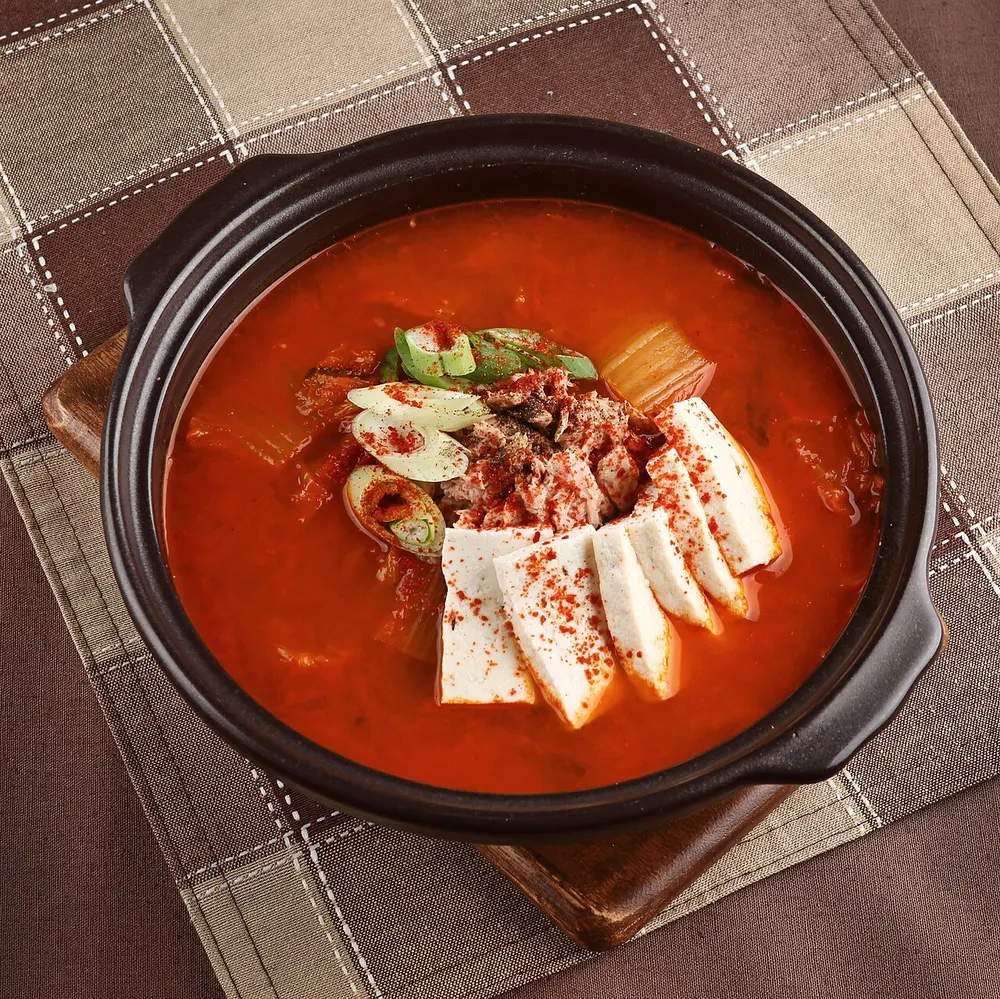
Kimchi Jjigae (Kimchi Stew)
Pinagmulan: Traditional
30 min3420 kcal
Walang gatas🌶️🌶️
Pork and cabbage fried hot and fast, chili flakes bloomed in the fat for exactly thirty seconds, and the sauce given only a few seconds in the pan. The odd move is last: half a spoon of vinegar over the rice at the table.
Pinagmulan
Recipe ni 자취요리신 (simple cooking) · 📱 Influencer · Korean YouTuber specialising in fast one-pot recipes aimed at people living alone; posts the written recipe under most of his videos
Ang pangalan ng mga nagluluto at creator ay nakalagay bilang pagkilala sa pinagmulan lamang. Malaya ang More Recipes Please at walang kaugnayan, pag-endorso o sponsorship mula sa kanila.
Recipe published by 자취요리신 / 자취요리신이 공개한 레시피 — He publishes the full written recipe with amounts in this video's description, headed 양배추목살덮밥을 만들어 보자 and framed as copying a restaurant that had gone around on social media. Two instructions make it distinctive, and both are about restraint: the gochugaru gets exactly 30 seconds in the fat and no more, and the sauce gets 살짝만 — only a few seconds — rather than being reduced. Then half a spoon of raw vinegar goes over the finished bowl at the table, which is not a common move on a Korean rice bowl and is the thing that makes it work. SERVINGS: he never writes a serving count. Our reading of 2 comes from his own 300 g of pork plus the cabbage volume over rice, and is our inference, not his figure.
Nagluto: 자취요리신 (simple cooking)
Panoorin habang niluluto
Cut the pork into bite-size pieces, chop the cabbage roughly, slice the onion and cut the green onion. Have all of it beside the hob before you light it.
💡 This is a stir-fry, which means there is no chopping time once it starts. From first heat to plate is about six minutes and every gap you leave to reach for something is a gap the pan spends burning.
Set a wide pan over medium-high heat with oil in it and give it a moment to get properly hot.
Add the pork, the green onion and the half spoon of minced garlic together.
Fry until the pork has no pink left on the outside and the green onion has softened and browned at the cut edges.
💡 Spread the pieces out and leave them for the first thirty seconds rather than stirring immediately. Pork shoulder in a crowded, stirred pan sheds water and stews grey instead of browning.
Add the onion and the cabbage and keep everything moving over the same high heat.
Fry only until the cabbage has wilted — his instruction is 숨이 죽게, until the breath goes out of it. It should collapse in volume but still have a spine when you bite it.
💡 Stop early rather than late. Cabbage goes from crunchy to wilted to watery grey in about a minute, and there is another minute of pan time still to come.
Drop the heat to low, add the 2 tablespoons of gochugaru and stir it through the fat for 30 seconds. His number, and it is exact.
In those 30 seconds the fat should turn clear deep red and the smell should go from raw and dusty to toasted. That colour change is the whole reason this step exists.
💡 Beginner warning: 30 seconds, not 3 minutes. Burnt gochugaru is bitter and there is no rescuing it — you would have to start the pan again. Low heat, spoon moving, count it out.
Add the sugar, soy sauce, oyster sauce and anchovy fish sauce and turn the heat back up.
Toss it for only a few seconds — his instruction is 살짝만 볶아줍니다, fry it only lightly — just long enough to coat everything.
💡 This is deliberate restraint at the point where instinct says to reduce. Cook the sauce down and the cabbage releases its water into it and the bowl goes soupy; a few seconds keeps the sauce a coating and the cabbage crisp.
Kill the heat immediately. Everything in the pan is already cooked.
Put the rice in a bowl and pile the pork and cabbage over it, dragging the red oil out of the pan with it.
Sprinkle the half spoon of vinegar over the finished bowl. It goes on raw, off the heat, at the table.
💡 Do not skip this and do not cook it in. Half a spoon of raw vinegar over a bowl this rich lifts the whole thing — you taste the pork and the chili more clearly, not less. Boil it in the pan and the sharpness evaporates and you get nothing.
Eat it straight away, while the cabbage still snaps and the vinegar is still sharp.
Korean
Pinagmulan: Traditional
Korean
Pinagmulan: Home cook
Korean
Pinagmulan: Home cook
Korean
Pinagmulan: Traditional
Niluto mo? Magbahagi ng larawan sa Showcase.
Ibahagi ang niluto mo →