Baguhan
Korean
Kimchi Jjigae (Kimchi Stew)
Pinagmulan: Traditional
30 min3420 kcal
Walang gatas🌶️🌶️
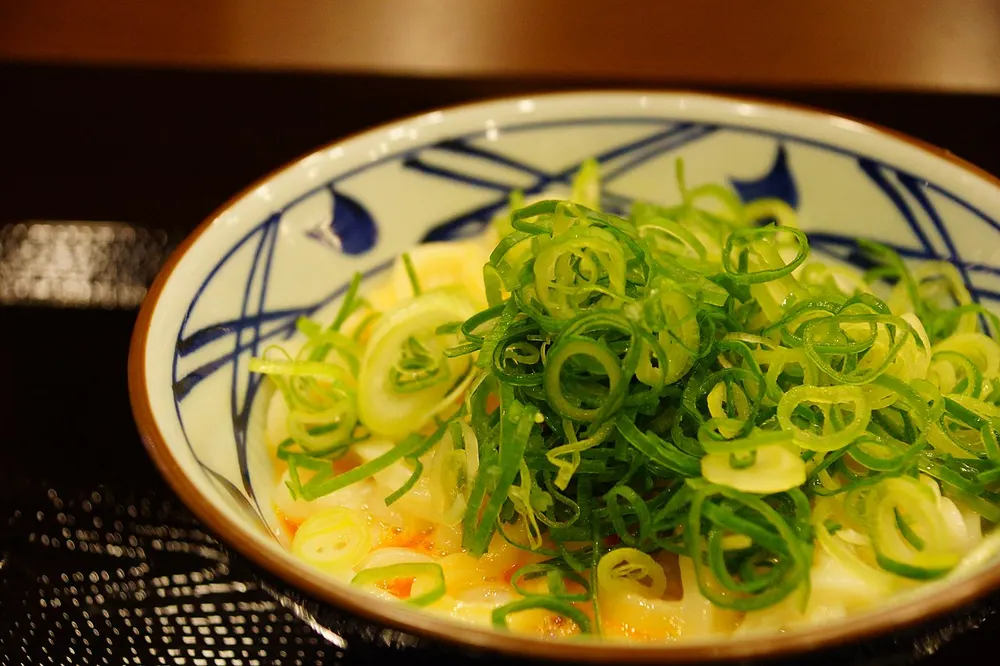
No broth, no boiling. One sachet of liquid soup base is split in two — half seasons the noodles, half becomes the marinade for the beef — and a raw yolk on top does the rest of the work as you stir.
Pinagmulan
Recipe ni 자취요리신 (simple cooking) · 📱 Influencer · Korean YouTuber specialising in fast one-pot recipes aimed at people living alone; posts the written recipe under most of his videos
Ang pangalan ng mga nagluluto at creator ay nakalagay bilang pagkilala sa pinagmulan lamang. Malaya ang More Recipes Please at walang kaugnayan, pag-endorso o sponsorship mula sa kanila.
Recipe published by 자취요리신 / 자취요리신이 공개한 레시피 — He publishes the full written recipe with amounts in this video's description, headed 니꾸가마타마 우동을 만들어 보자. Distinctive: the pack's single liquid soup sachet is deliberately split in half — one half seasons the drained noodles, the other becomes the marinade the beef and shiitake are fried in — so one sachet does two different jobs and no broth is ever made. The noodles are soaked in hot water rather than boiled, and a raw yolk stirred through the hot bowl finishes it. TAXONOMY: filed to Japan because kamatama udon (釜玉うどん) is a Sanuki dish and 肉釜玉 its beef version; the route through a Korean convenience-store udon pack does not move the dish's origin. SERVINGS: he never writes a serving count. Our reading of 1 follows his sachet arithmetic — one flake sachet plus one liquid sachet halved equals one pack — and is our inference, not his figure.
Nagluto: 자취요리신 (simple cooking)
Panoorin habang niluluto
Put the udon block in a bowl and pour hot water over it until it is covered. His method soaks the noodles — it never boils them.
💡 Fresh udon packs come pre-cooked and vacuum-sealed. Hot water is only there to break the block apart and warm it through; a rolling boil turns it to mush.
Leave it a couple of minutes, nudging it with chopsticks until the strands separate and slide over each other.
While it soaks, slice the shiitake and the green onion, and separate the yolk from the white — you only want the yolk.
💡 Crack the egg into your hand and let the white run through your fingers — easier than the shell-to-shell method, and the yolk is less likely to split.
Drain the noodles well and put them in the serving bowl.
Add the whole flake sachet and HALF the liquid soup sachet to the noodles and toss until every strand is coated.
💡 Half. The other half is the beef marinade — this is the trick the whole recipe is built on, and tipping the lot in here leaves the meat with nothing but sugar and garlic.
In a second bowl, mix the beef brisket, the sliced shiitake, the OTHER half of the liquid soup sachet, the half spoon of sugar and the half spoon of minced garlic.
Work it through with your fingers or chopsticks so the frozen slices come apart and each one picks up some marinade.
Set a pan over medium-high heat with no oil and tip the beef and mushrooms in.
💡 No oil. Chadolbaegi is bought for its fat and releases a pool of it inside a minute — the mushrooms then fry in that, which is most of why they taste good.
Fry until the beef edges catch and brown and the marinade has reduced onto the meat rather than pooling under it.
Watch it closely at the end — there is sugar in that marinade and it goes from caramelised to burnt in seconds.
Pile the hot beef and mushrooms straight onto the seasoned noodles.
Scatter the green onion over and sit the raw yolk in the middle.
Break the yolk and stir the whole bowl hard, right now, while the noodles and beef are still hot.
💡 The heat of the noodles is the only thing that cooks that yolk, and it works for about a minute. Stir it late and you have raw egg on cold udon instead of a sauce.
Korean
Pinagmulan: Traditional
Korean
Pinagmulan: Home cook
Korean
Pinagmulan: Home cook
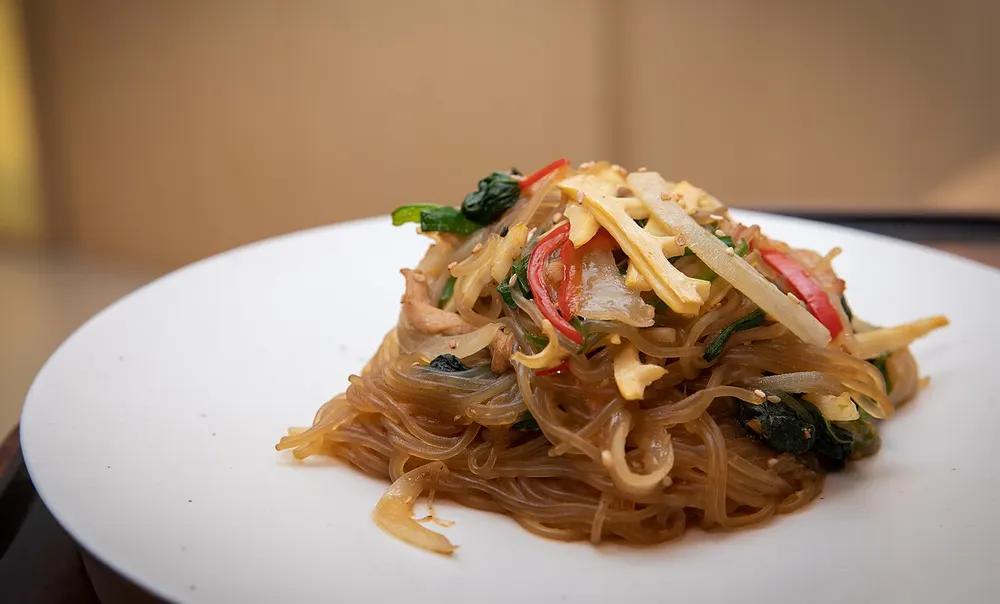
Korean
Pinagmulan: Traditional
Niluto mo? Magbahagi ng larawan sa Showcase.
Ibahagi ang niluto mo →