Baguhan
Korean
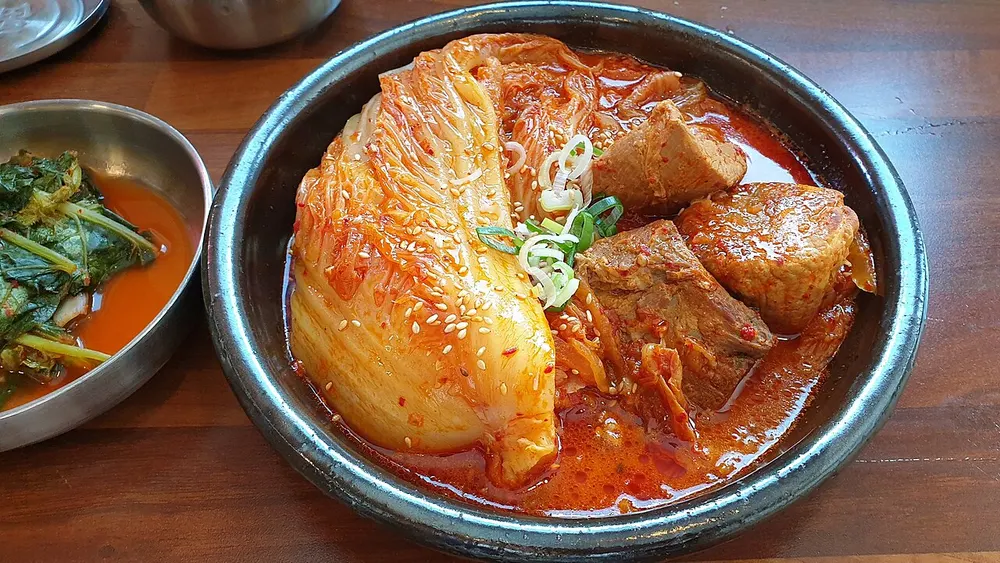
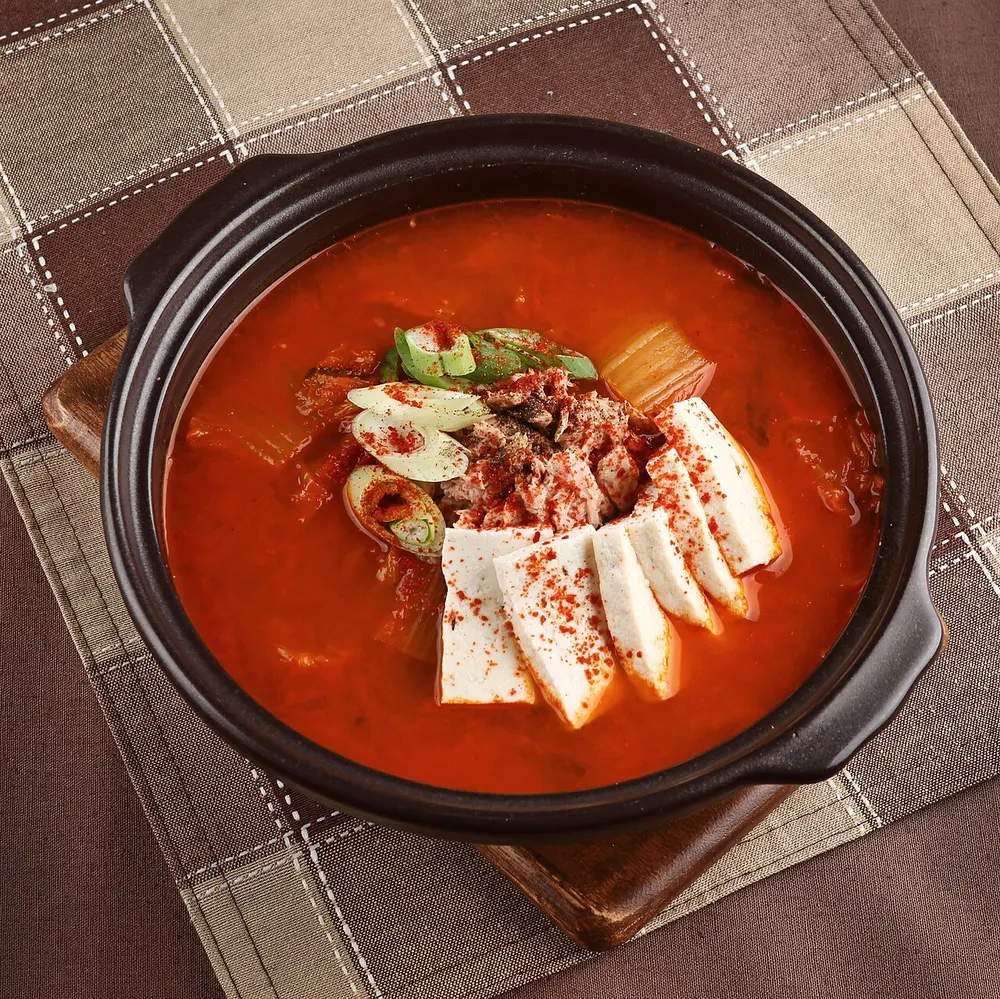
Kimchi Jjigae (Kimchi Stew)
Pinagmulan: Traditional
30 min3420 kcal
Walang gatas🌶️🌶️
Pork belly and kimchi, browned hard and then covered for exactly five minutes — the shortcut version of a dish that normally braises for an hour. Built to be shovelled over rice with seaweed flakes and sesame oil.
Pinagmulan
Recipe ni 자취요리신 (simple cooking) · 📱 Influencer · Korean YouTuber specialising in fast one-pot recipes aimed at people living alone; posts the written recipe under most videos
Ang pangalan ng mga nagluluto at creator ay nakalagay bilang pagkilala sa pinagmulan lamang. Malaya ang More Recipes Please at walang kaugnayan, pag-endorso o sponsorship mula sa kanila.
Recipe published by 자취요리신 / 자취요리신이 공개한 레시피 — The creator publishes the full written recipe in this video's description, framing it as the thing worth deliberately saving leftover pork belly for. Distinctive: a hard dry-fry with no added oil, then a mere five covered minutes instead of the usual long braise.
Nagluto: 자취요리신 (simple cooking)
Panoorin habang niluluto
Cut the pork belly and the kimchi into bite-size pieces, slice the onion, and cut the green onion on a slant.
Set a pan over medium-high heat with no oil at all.
💡 Pork belly is roughly half fat — it renders its own oil within a minute. Adding oil now just makes the finished dish greasy.
Add the pork and the green onion and stir-fry for 3 to 4 minutes, until the edges of the pork are browned and the fat in the pan runs clear.
Add the kimchi and the onion and keep stir-frying for 2 to 3 minutes.
Wait for the kimchi to deepen in colour and smell sweet and sour rather than sharp — that is it losing its raw edge.
💡 This is the step most people cut short. Under-fried kimchi stays aggressive and thin-tasting no matter how long you simmer it after.
Push everything to one side, add the gochugaru into the rendered fat, and stir it for about 30 seconds until it blooms into a red oil.
Pour in the 1 cup of water — it should hiss sharply and lift the browned glaze off the base of the pan.
Add the minced garlic and the chicken stock powder and stir once to dissolve.
Put the lid on, let it come to a boil, then cook for 5 minutes over medium heat.
Take the lid off: the kimchi should be tender enough to give under a spoon, and the sauce should be reduced, glossy and clinging to the meat.
Taste it. Kimchi varies wildly in salt — if it is flat, a little more stock powder; if it is sharp, a pinch of sugar.
Spoon it over hot white rice, scatter seaweed flakes on top and finish with the sesame oil.
Korean
Pinagmulan: Traditional
Korean
Pinagmulan: Home cook
Korean
Pinagmulan: Home cook
Korean
Pinagmulan: Traditional
Niluto mo? Magbahagi ng larawan sa Showcase.
Ibahagi ang niluto mo →