Baguhan
Korean
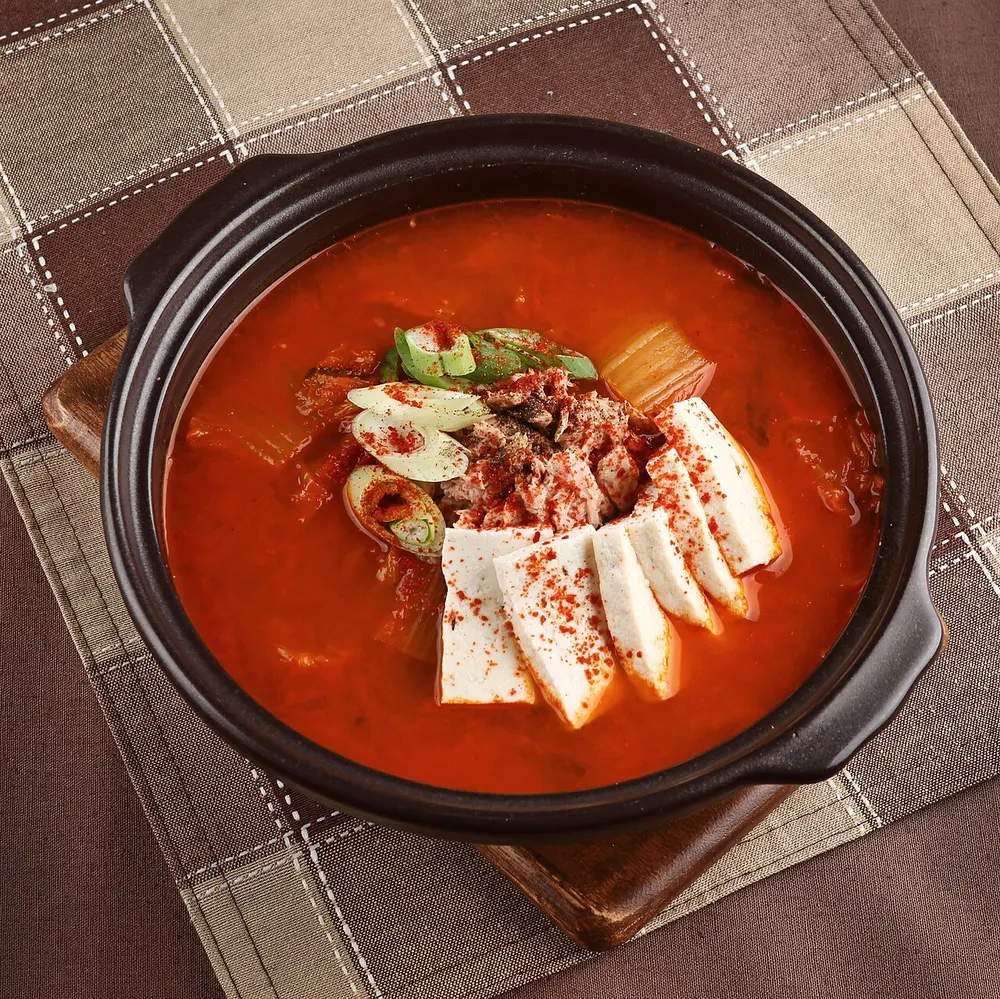
Kimchi Jjigae (Kimchi Stew)
Pinagmulan: Traditional
30 min3420 kcal
Walang gatas🌶️🌶️
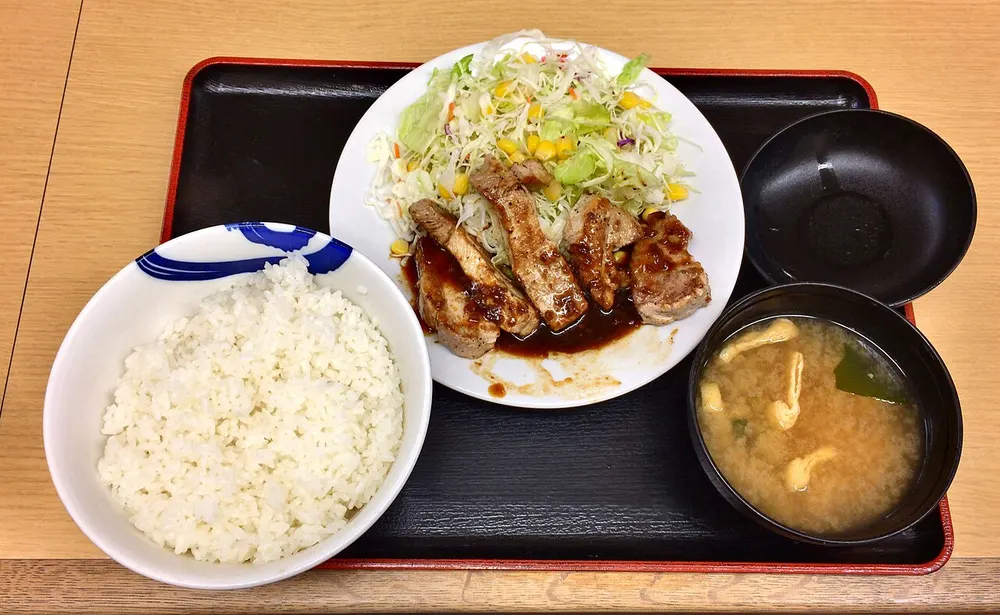
Half a kilo of pork shoulder, scored on both faces, cooked lid-on for two minutes at a time and turned four times. Then a sauce built from tonkatsu sauce and oyster sauce reduces onto it. Two ingredients on the list; eight minutes of discipline.
Pinagmulan
Recipe ni 자취요리신 (simple cooking) · 📱 Influencer · Korean YouTuber specialising in fast one-pot recipes aimed at people living alone; posts the written recipe under most of his videos
Ang pangalan ng mga nagluluto at creator ay nakalagay bilang pagkilala sa pinagmulan lamang. Malaya ang More Recipes Please at walang kaugnayan, pag-endorso o sponsorship mula sa kanila.
Recipe published by 자취요리신 / 자취요리신이 공개한 레시피 — He publishes the full written recipe with amounts in this video's description, headed 돈테키를 만들어 보자. Distinctive: the ingredient list is two lines long — 통목살 500g and cabbage — and all of the technique is in the timing. The block is scored front and back, seasoned in the pan rather than marinated, and cooked lid-on in four separate two-minute stints before a seven-part sauce is reduced onto it. TAXONOMY: filed to Japan because とんてき is a Yokkaichi speciality and his sauce (tonkatsu sauce, oyster sauce, vinegar, sugar, garlic) sits squarely in that dish's Worcestershire-family tradition, cabbage and all. SERVINGS: he never writes a serving count. Our reading of 2 comes from his own 500 g of pork and is not a figure he published.
Nagluto: 자취요리신 (simple cooking)
Panoorin habang niluluto
Take the pork out of the fridge and pat both faces dry with kitchen paper.
Score both sides in a shallow crosshatch, cutting maybe a third of the way in — his instruction is 앞뒤로 칼집, front and back.
💡 The scoring is not decoration. A 500 g block of shoulder has sinew running through it that tightens and curls the meat off the pan as it heats; cutting through it keeps the block flat so it browns evenly, and it lets the sauce reach the middle later.
Shred the cabbage finely and put it in cold water while you cook — it crisps up and it is the only fresh thing on the plate.
Mix the sauce in a cup before the meat goes anywhere near the pan: water, sugar, tonkatsu sauce, oyster sauce, vinegar, chicken stock powder and minced garlic. Stir until the sugar has gone.
💡 Mix it now. Once the pork is out of the pan you have about a minute before it cools, and measuring seven things while it does is how the sauce ends up with lumps of stock powder in it.
Set a pan over medium heat with a film of oil, and lay the pork in.
Season it with salt and pepper now, while it is in the pan — his method salts the meat on the heat rather than beforehand.
Put the lid on and cook for 2 minutes.
💡 The lid is the whole technique. A 500 g block browns on the outside long before its middle is done; the lid traps steam and cooks it through from above at the same time as the pan browns it from below.
Turn it, lid back on, another 2 minutes. Then again. Then again — four turns of 2 minutes each, eight minutes in total. That is his instruction, precisely.
Do not shortcut the turning. Each face gets two separate two-minute stints rather than one four-minute one, which is what browns it without drying the middle.
Check it: the block should be firm rather than springy when you press it, and juice from a skewer hole should run clear, not pink.
💡 Thickness decides the time, not the clock. His eight minutes assume a standard 500 g block — a fatter cut wants another turn or two. Test rather than trust the number.
Lift the lid off, pour the sauce in around the meat and turn the heat up to medium-high.
Reduce it, spooning it over the pork as it goes. It thickens fast — sugar and tonkatsu sauce together go from liquid to glaze in a couple of minutes.
💡 Watch it rather than time it. There are two sugars in that sauce and the pan is hot — the gap between glossy and burnt is about fifteen seconds.
When the sauce clings to the pork instead of pooling around it, take the pan off the heat.
Rest the block on a board for a couple of minutes, then slice it across into thick fingers so each piece shows a sauced edge and a pale middle.
Drain the cabbage, pile it beside the pork, and spoon whatever sauce is left in the pan over the lot.
Korean
Pinagmulan: Traditional
Korean
Pinagmulan: Home cook
Korean
Pinagmulan: Home cook
Korean
Pinagmulan: Traditional
Niluto mo? Magbahagi ng larawan sa Showcase.
Ibahagi ang niluto mo →