Baguhan
Korean
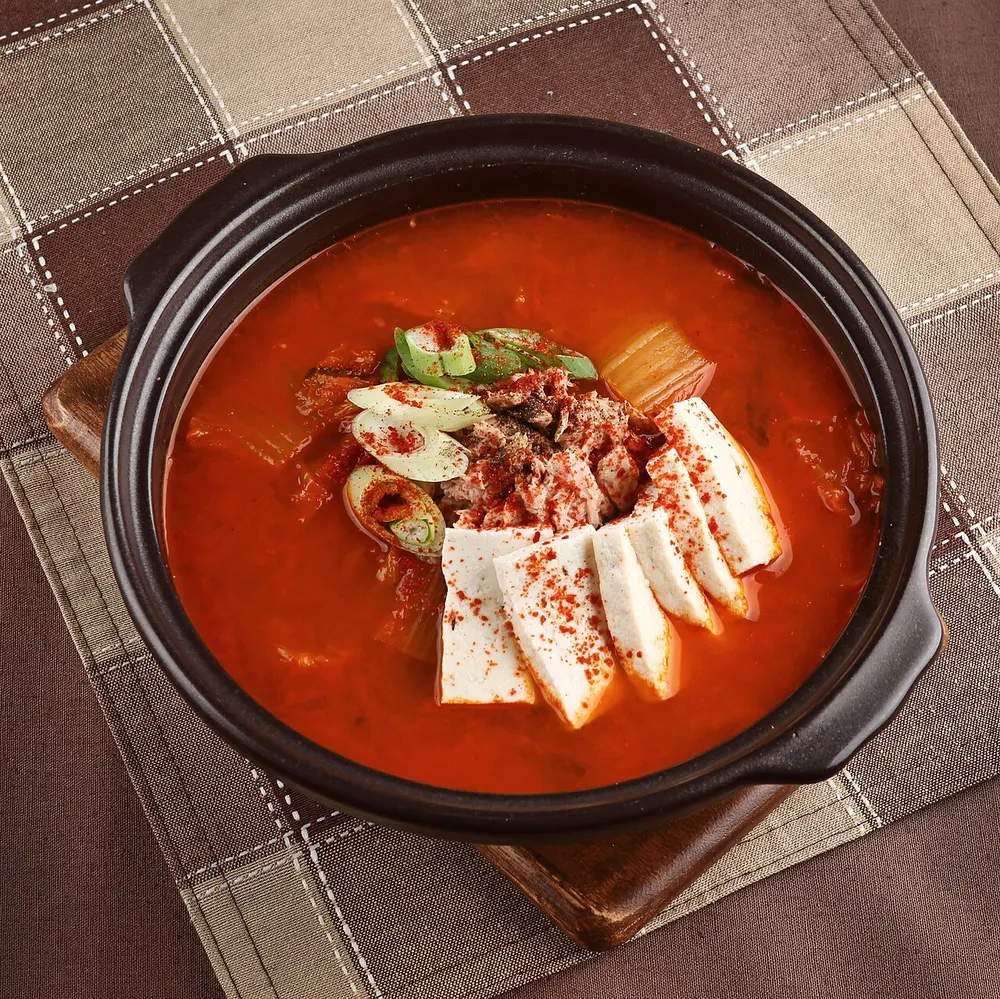
Kimchi Jjigae (Kimchi Stew)
Pinagmulan: Traditional
30 min3420 kcal
Walang gatas🌶️🌶️
Two packs of seafood ramyeon, boiled in water until the water is gone, then boiled again in the same volume of milk. Only one of the two powder sachets goes in at the start — the second one is held back to season at the end.
Pinagmulan
Recipe ni 자취요리신 (simple cooking) · 📱 Influencer · Korean YouTuber specialising in fast one-pot recipes aimed at people living alone; posts the written recipe under most of his videos
Ang pangalan ng mga nagluluto at creator ay nakalagay bilang pagkilala sa pinagmulan lamang. Malaya ang More Recipes Please at walang kaugnayan, pag-endorso o sponsorship mula sa kanila.
Recipe published by 자취요리신 / 자취요리신이 공개한 레시피 — He publishes the full written recipe with amounts in this video's description, headed 해물향 가득한 크림 너구리를 만들어 보자. Two things make it distinctive. The liquid arrives in two stages — 540 ml of water is boiled away to nothing first, then exactly 540 ml of milk is added and simmered for 5 more minutes — and the seasoning is deliberately split, with only one of the two powder sachets going in at the start and the second held back to correct the salt at the end. SERVINGS: 2 is the clearest reading in this batch because he writes 너구리 2봉 in his own ingredient list, but he still never writes the words '2인분' anywhere — the serving figure remains our reading of his scale.
Nagluto: 자취요리신 (simple cooking)
Panoorin habang niluluto
Pour the 540 ml of water into a wide pan — not a deep pot — and set it over high heat.
💡 Wide matters here more than usual. The entire first half of this recipe is boiling that water away, and a narrow pot has nowhere for the steam to go.
Add both noodle blocks, both flake sachets, and ONE of the two powder sachets. Put the second powder sachet aside where you will not absent-mindedly tip it in.
💡 Two packs' worth of powder in 540 ml would be brutal — that is barely half the water two packs normally want. The held-back sachet is a seasoning tool for the end, not an oversight.
Boil hard, turning the noodles over with chopsticks as they soften so they cook evenly in the shallow liquid.
Keep boiling until the water has essentially gone — the pan should look wet and glossy, not soupy, and dragging a chopstick across the base should leave a track that fills back slowly.
💡 This is not the same as cooking the noodles. You are reducing two packs of seasoning down onto them so that what is left is concentrated — that concentrate is what the milk is about to be poured onto.
Pour in the 540 ml of milk all at once and drop the heat to medium — the exact same volume you started with in water.
Medium heat from here on, and stir. Milk on high heat catches on the base and scorches, and one scorched patch flavours the whole pan.
💡 Beginner warning: this is the step that goes wrong. Milk does not behave like water — it climbs the sides and boils over in one second flat if you let it get to a rolling boil. Keep it at a lazy simmer.
Simmer for 5 minutes, stirring often. The milk thickens as the noodles keep releasing starch, and the seafood flakes rehydrate into it.
You will see it turn: thin milk to a sauce that clings to the noodles when you lift them. That is the dish arriving.
Now taste it, and add the second powder sachet a little at a time until the seasoning is where you want it.
💡 A little at a time, tasting between. You may not want all of it — milk mutes salt and heat, so how much you need depends on how far the milk reduced, which is different in every pan.
Kill the heat and lay the cheddar over the top.
Let the residual heat melt it — it takes under a minute and needs no flame. Fold it through once when it has gone slack.
💡 Cheese added over heat splits into oil and rubbery strings. Off the heat it melts into the sauce and stays there.
Scatter over plenty of sliced cheongyang chili and grind on the black pepper.
Eat it now, straight from the pan. Cream sauces built on noodle starch keep thickening as they cool, and this one sets fast.
Korean
Pinagmulan: Traditional
Korean
Pinagmulan: Home cook
Korean
Pinagmulan: Home cook
Korean
Pinagmulan: Traditional
Niluto mo? Magbahagi ng larawan sa Showcase.
Ibahagi ang niluto mo →