Baguhan
Korean
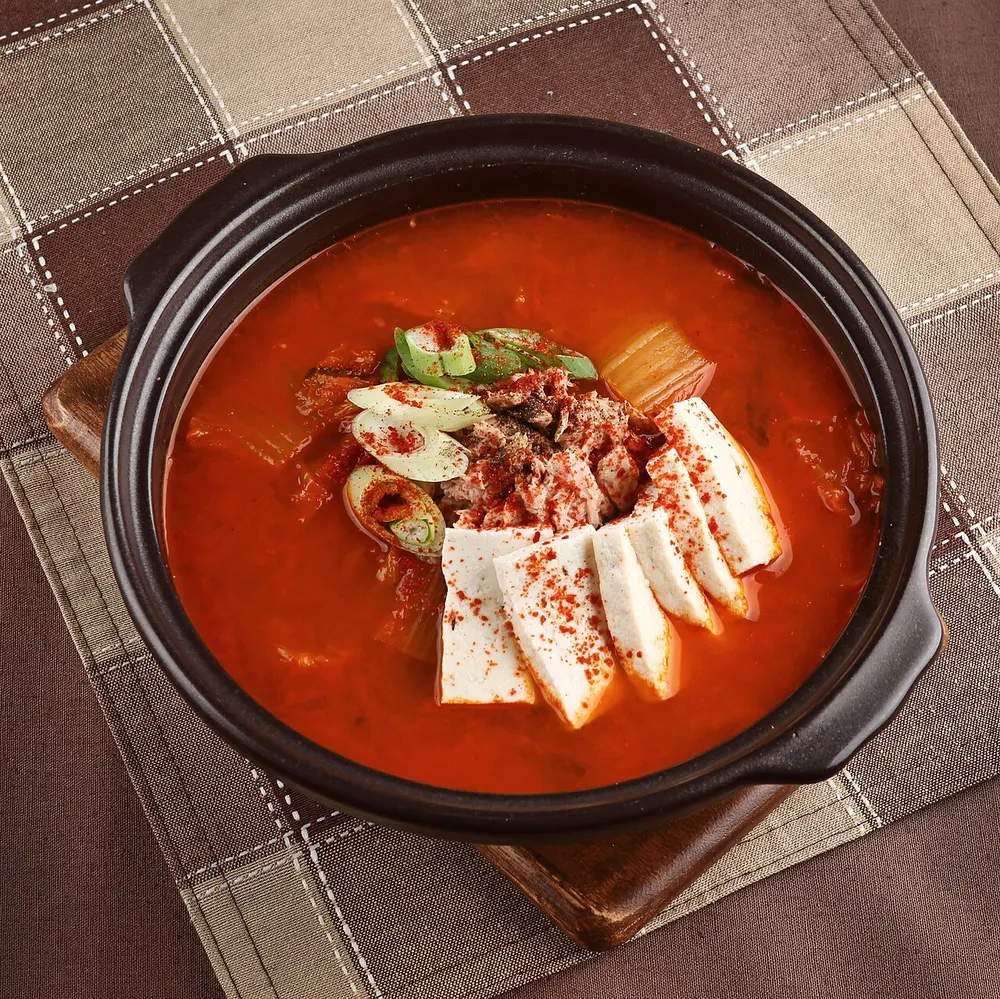
Kimchi Jjigae (Kimchi Stew)
Pinagmulan: Traditional
30 min3420 kcal
Walang gatas🌶️🌶️
Eggplant browned in rendered beef fat, steamed soft with a splash of water, then coated in Chinese chili-oil sauce and spooned over rice. Ten minutes, one pan, and the eggplant finally tastes of something.
Pinagmulan
Recipe ni 1인분레시피 · 📱 Influencer · Korean YouTuber who cooks strictly for one: his channel bio describes it as "simple, tasty recipes tailored to one serving, for single-person households", and he publishes each ingredient list with amounts plus a numbered method
Ang pangalan ng mga nagluluto at creator ay nakalagay bilang pagkilala sa pinagmulan lamang. Malaya ang More Recipes Please at walang kaugnayan, pag-endorso o sponsorship mula sa kanila.
Recipe published by 1인분레시피 — The creator publishes the full recipe — every amount, ten numbered steps, his own tips and a footnote explaining what rajojang is — in this video's description. Note on the serving count: unlike his doenjang-jjigae and eomuk-bokkeum, this title does not contain the word 1인분; "[1인분레시피]" there is his series name. servings: 1 is therefore OUR reading, resting on that series framing (his channel bio: recipes tailored to one serving) and on the scale — two-thirds of an eggplant, 80 g of beef, one bowl of rice. The water in step 7 appears in his method but not his ingredient list, which is why it is marked that way above.
Nagluto: 1인분레시피
Panoorin habang niluluto
Slice the green onion into thin rounds.
Cut the eggplant into 6 cm lengths, halve each one, then cut each half into 3.
💡 His note: any shape is fine, but keep the pieces big enough to chew. Eggplant shrinks hard in the pan — cut it small and it disappears into mush.
Set a pan over medium heat and lay in the beef brisket. Fry it until the surface has cooked, with no oil — it makes its own.
Once the surface has cooked, cut the beef into bite-size pieces right there in the pan.
💡 His reason, and it is a good one: the meat only cuts cleanly once it is cooked. Raw thin-sliced brisket stretches and tears instead of cutting — this is why he cooks first and cuts second.
Add the sliced green onion and the 1/6 tbsp of minced garlic to the beef fat and fry for 20 seconds.
Add the eggplant and fry until the cut faces turn golden brown.
💡 Let it sit still for the first while instead of stirring. Eggplant browns properly only in contact with the pan, and browning is where the flavour comes from — constant stirring just steams it grey.
When the surfaces are golden, pour in the 1/2 cup of water, drop to medium and cook for 2 minutes.
The eggplant is ready when it has gone glossy and soft and collapses under a light press — the water should be nearly gone.
💡 The splash of water is a steaming trick, not a sauce. It cooks the inside of the eggplant through without needing more oil — eggplant is a sponge and will drink every drop you give it.
Add the 1 tbsp of rajojang and fry for 1 minute so every piece is coated in red oil.
Sprinkle in the half tbsp of soy sauce and the black pepper, and turn everything through once.
Taste it. The rajojang has already brought salt and heat, so the soy is a finishing note rather than the seasoning.
💡 Brands of rajojang vary wildly in salt and heat. If yours is a strong one, hold back some of the soy — you cannot un-salt a rice bowl.
Spoon it over a bowl of hot rice, and add a soft-boiled egg on top if you like — his own suggestion.
Korean
Pinagmulan: Traditional
Korean
Pinagmulan: Home cook
Korean
Pinagmulan: Home cook
Korean
Pinagmulan: Traditional
Niluto mo? Magbahagi ng larawan sa Showcase.
Ibahagi ang niluto mo →