Baguhan
Korean
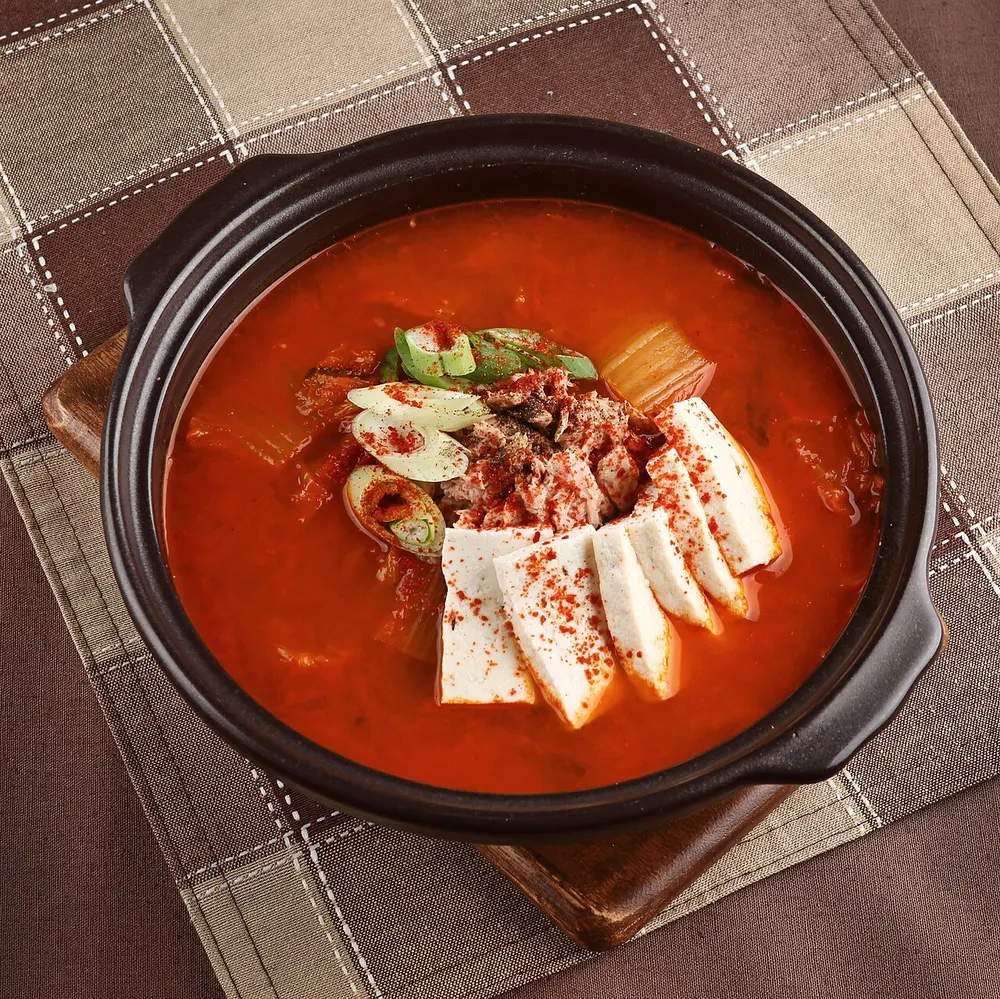
Kimchi Jjigae (Kimchi Stew)
Pinagmulan: Traditional
30 min3420 kcal
Walang gatas🌶️🌶️
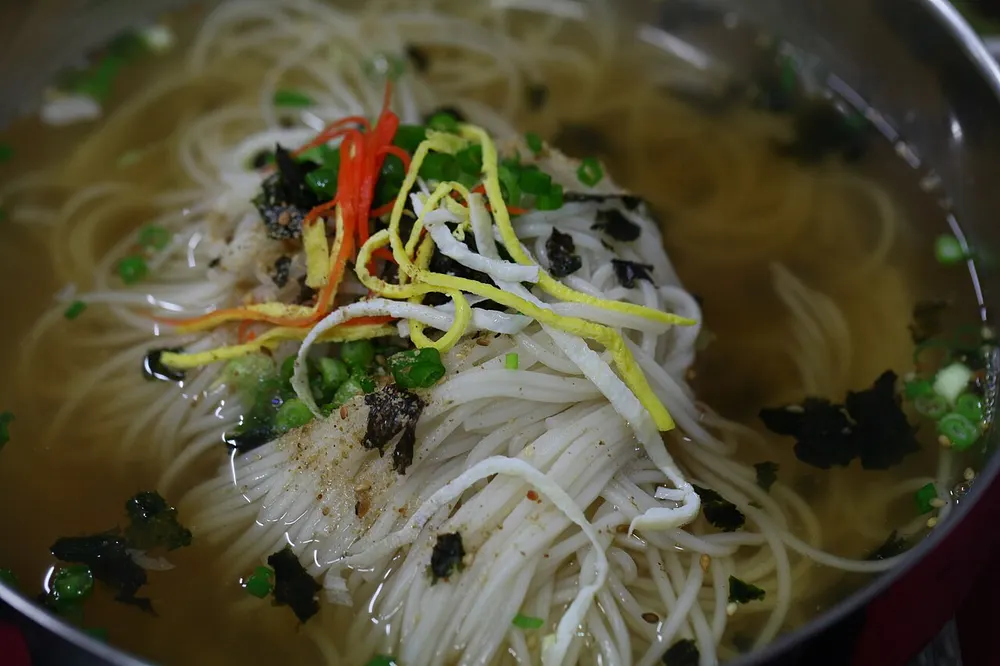
A banquet-noodle broth built in two stages the Japanese way: kelp steeped alone over the lowest heat, pulled out before it turns slimy, and only then dipori boiled hard to drive the flavour out.
Pinagmulan
Recipe ni 정호영 · 👨🍳 Chef · Jung Ho-young — Japanese-cuisine chef, trained at the Tsuji Culinary Institute, Japan
Ang pangalan ng mga nagluluto at creator ay nakalagay bilang pagkilala sa pinagmulan lamang. Malaya ang More Recipes Please at walang kaugnayan, pag-endorso o sponsorship mula sa kanila.
Jung Ho-young (Kitchen Caden) — Published by Jung Ho-young on his own YouTube channel, 정호영의 오늘도 요리 Kitchen Caden, as '[잔치국수] 국물 진심 미쳤습니다!' — at over 284,000 views it is one of his most-watched recipes. Both the stock ingredients and the noodle-bowl ingredients are printed as separate lists in the video description, along with his numbered method, and every quantity here is taken from it. What distinguishes his version is the two-stage stock: the kelp is steeped alone on the lowest heat and lifted out before the pot is ever brought to a hard boil, and only then are the dipori boiled hard.
Nagluto: 정호영
Panoorin habang niluluto
Put 2 L of cold water in a pot with one A4-sized sheet of dasima and set it over the LOWEST heat you have. Let it come up gently — never let it boil.
💡 Boiled kelp turns slippery and faintly bitter, and that slime never leaves the broth. Low and slow draws out the clean, sweet glutamate instead. This is textbook Japanese dashi practice applied to a Korean noodle soup, which is exactly what you would expect from a Tsuji-trained chef.
Watch the kelp, not the clock. When the sheet has swollen and gone visibly thick and fleshy, it has given what it has.
💡 He gives you a look, not a time, and that is deliberate — kelp thickness and water temperature both move the clock. Thick and fleshy is the signal.
Add the 20 dipori to the same pot and keep it on the low, quiet heat.
While the stock works, cut the onion, zucchini, green onion, fish cake and Cheongyang chilies into bite-size pieces.
Boil the somyeon in a separate pot of water, then drain and rinse it under cold running water, rubbing the strands with your hands until they squeak.
💡 Never cook noodles in the broth. Somyeon is dusty with surface starch — cook it in the stock and you cloud the broth you just spent half an hour clarifying.
Now fish the kelp out — the kelp ONLY. Leave the dipori in.
💡 This split is the whole design. Kelp is done and about to turn on you; the dipori has barely started. Two ingredients, two different jobs, two different heats.
Turn the heat up to high and boil the dipori hard for several minutes, until the broth darkens to a deep tea colour and smells savoury rather than raw.
Scoop the dipori out and discard them.
Season the broth: minced garlic (1큰술), cooking wine (1큰술), guk-ganjang (2큰술) and tuna extract (2큰술).
💡 Notice how little soy goes into 2 L. Janchi-guksu broth is supposed to be pale gold and delicate — dump in soy until it looks like the colour you expect and you have made a salty brown soup instead.
Add the cut vegetables and fish cake and let it come to a boil once — 2–3 minutes, until the zucchini turns slightly translucent and the fish cake puffs and softens.
Taste it now, then add the salt (1/4큰술) only if it needs it.
💡 Beginner warning: fish cake is already salty and brands vary a lot. He puts the salt last and calls it 'the salt to top up what is missing' — that word order matters.
Coil a nest of the rinsed noodles into each bowl and ladle the boiling broth, vegetables and fish cake over them.
Finish with black pepper and whatever toppings you like — seaweed flakes, shredded kelp, egg jidan — and eat immediately.
Korean
Pinagmulan: Traditional
Korean
Pinagmulan: Home cook
Korean
Pinagmulan: Home cook
Korean
Pinagmulan: Traditional
Niluto mo? Magbahagi ng larawan sa Showcase.
Ibahagi ang niluto mo →