Baguhan
Korean
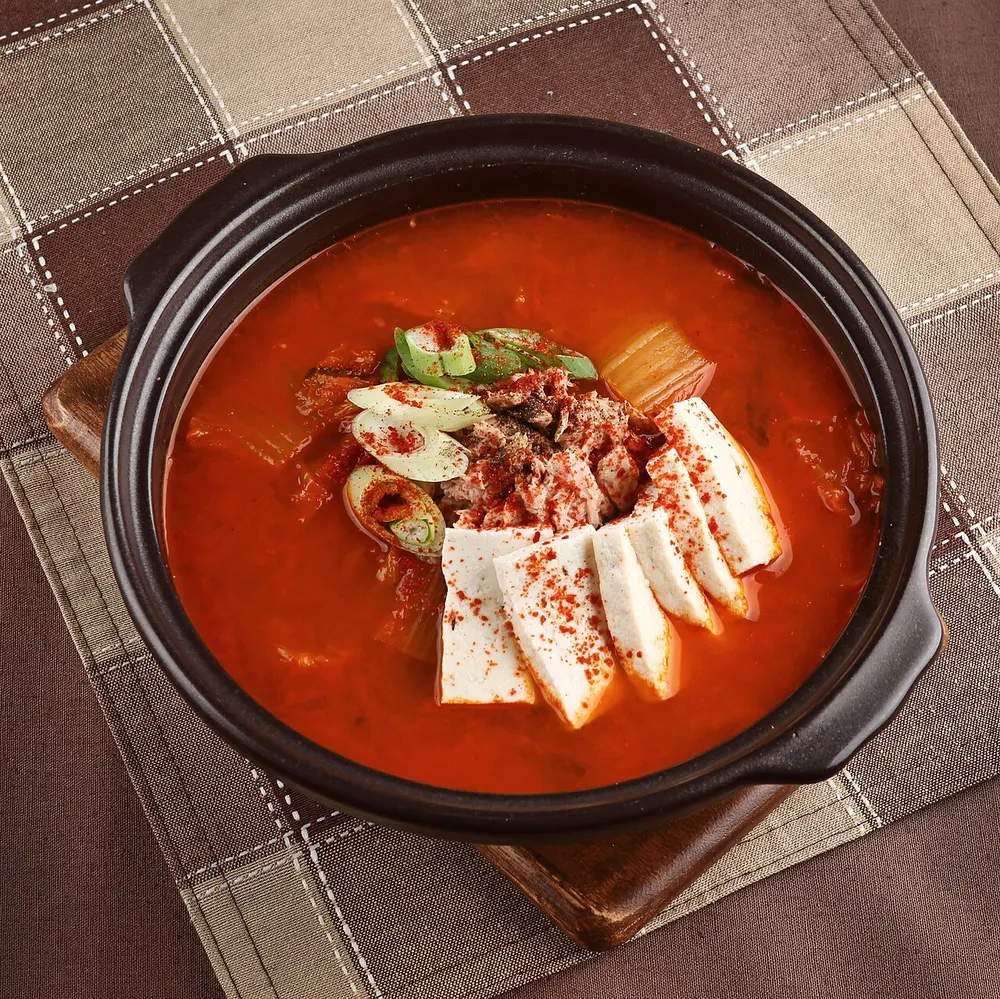
Kimchi Jjigae (Kimchi Stew)
Pinagmulan: Traditional
30 min3420 kcal
Walang gatas🌶️🌶️
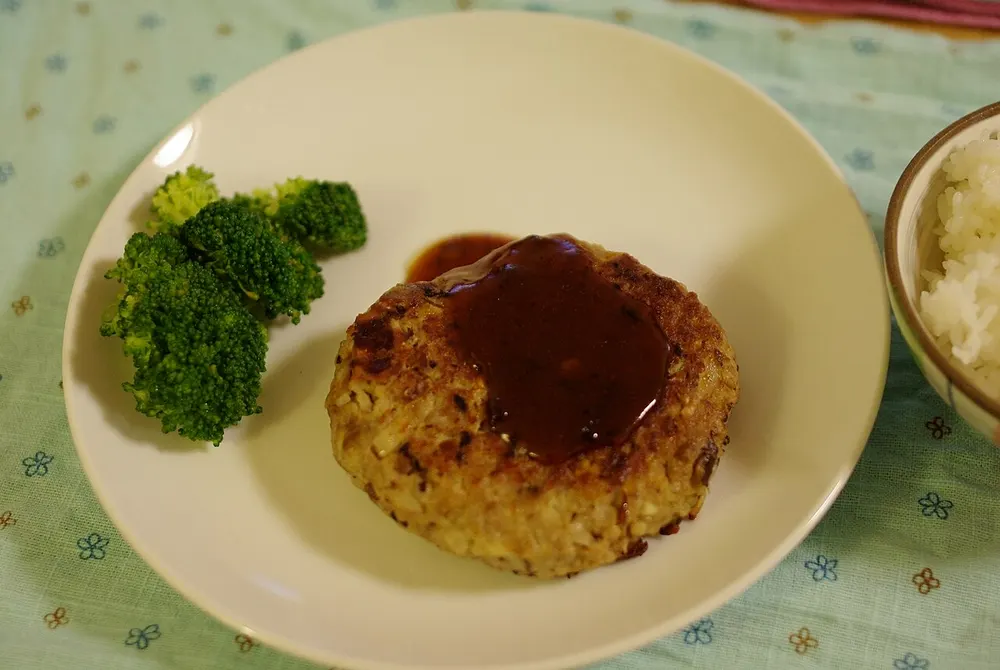
Japan's favourite Western dish stripped to four ingredients — mince, raw onion, salt, pepper. No breadcrumbs, no egg, no milk. Rolled into balls, baked at 230°C, and drowned in a ketchup you caramelise yourself.
Pinagmulan
Recipe ni 栗原はるみ · 👨🍳 Chef · Harumi Kurihara — Japan's best-known ryori-kenkyuka (cookery researcher); her company Yutori no Kukan publishes her recipes and personal magazine
Ang pangalan ng mga nagluluto at creator ay nakalagay bilang pagkilala sa pinagmulan lamang. Malaya ang More Recipes Please at walang kaugnayan, pag-endorso o sponsorship mula sa kanila.
Harumi Kurihara (official site, Yutori no Kukan) — Published on Harumi Kurihara's official recipe site, run by her own company Yutori no Kukan, as '手作りケチャップハンバーグ' — hambagu with homemade ketchup. The full 材料 list for 4 servings, her numbered method and the separate sub-recipe for the ketchup are all published there as text, and the quantities here are taken from it directly. Hers is a radically pared-back hambagu: no breadcrumbs, no egg, no milk, and the onion goes in raw and diced rather than sweated in butter first. The mixture is divided into four and rolled into round balls — not flattened into patties — set on an oiled iron pan or ovenproof dish, and baked at 230°C for 15–20 minutes rather than fried, with her note that the time depends on the dish you use. The ketchup is built from a caramel of granulated sugar and honey, let down with red wine vinegar, blended with canned tomatoes and reduced 20–25 minutes; she says it keeps 5–7 days refrigerated.
Nagluto: 栗原はるみ
Panoorin habang niluluto
Start with the ketchup. Put the granulated sugar into a small saucepan, then pour the honey in around the outside edge of the pan, and set it over medium heat.
💡 Honey around the outside, not into the middle. It is her instruction and it is precise: the honey melts first at the hot rim and creeps inward, giving the dry sugar something to dissolve into so it never scorches in one dry spot.
Shake the pan to move the sugar around — do not stir it with a spoon — until it has melted and turned a pale caramel colour, then take it straight off the heat.
💡 Shake, never stir: a spoon dragged through melting sugar makes it seize into gritty crystals. And 'pale' means pale — caramel goes from golden to acrid in about ten seconds, and burnt caramel will make the whole batch bitter with no way back.
With the pan off the heat, add the red wine vinegar a little at a time, mixing as you go. It will hiss and steam violently at first.
💡 Off the heat and a little at a time, both for safety — cold vinegar hitting 170°C sugar erupts. Stand back and pour slowly.
Add the canned tomatoes, stir until everything is combined, then blitz it smooth with a hand blender.
Put it back on the heat. Once it boils, drop to low and let it reduce for 20–25 minutes, stirring now and then, until it is thick enough to mound on a spoon.
💡 Stir occasionally and mean it — a thickening tomato reduction catches on the base the moment you stop paying attention, and scorched tomato tastes of ashtray.
Turn off the heat, stir in the 1/3 tsp of salt, and leave the ketchup to cool. It keeps 5–7 days in the fridge.
💡 Salt last, off the heat. Add it at the start and 25 minutes of reduction would concentrate it into something inedibly salty.
Now the hambagu. Cut the onion into 5–6 mm dice.
💡 Raw, and diced rather than minced. Almost every hambagu recipe has you sweat the onion in butter first and cool it; hers goes in straight from the board. Baked inside the meat it half-steams and keeps a sweet, distinct bite instead of dissolving into the background.
Preheat the oven to 230°C.
Put the mince in a bowl, add the salt and pepper, and mix it well.
💡 Meat and salt first, alone, and mixed well. Salt worked into mince on its own draws out the proteins that bind — that stickiness is what holds these together without a single breadcrumb or egg.
Add the diced onion and mix again. Divide the mixture into 4 and shape each portion into a round ball.
💡 Balls, not patties — and no dimple in the middle, no slapping between the palms to knock the air out. Those rituals exist to stop a hambagu ballooning in a frying pan. There is no frying pan here.
Film an iron pan or an ovenproof dish thinly with oil and sit the four balls on it.
Bake at 230°C for 15–20 minutes, until cooked all the way through.
💡 230°C is hot, and that is the design: high heat browns the outside fast while the ball shape keeps the middle from drying. She notes the time must be adjusted for the dish you use — a heavy iron pan holds heat and runs faster than a ceramic one. If unsure, a skewer into the centre should come out with clear juices, not pink.
Take them out while they are still hot and spoon the homemade ketchup over them. Add a little soy sauce or tonkatsu sauce on top as well, if you like.
💡 Note that the soy and tonkatsu sauce go ON TOP of the ketchup, as an extra — they are not alternatives to it. That salty-sharp layer over the sweet caramelised tomato is very much the Japanese yoshoku way with hambagu.
Korean
Pinagmulan: Traditional
Korean
Pinagmulan: Home cook
Korean
Pinagmulan: Home cook
Korean
Pinagmulan: Traditional
Niluto mo? Magbahagi ng larawan sa Showcase.
Ibahagi ang niluto mo →