Principiante
Korean
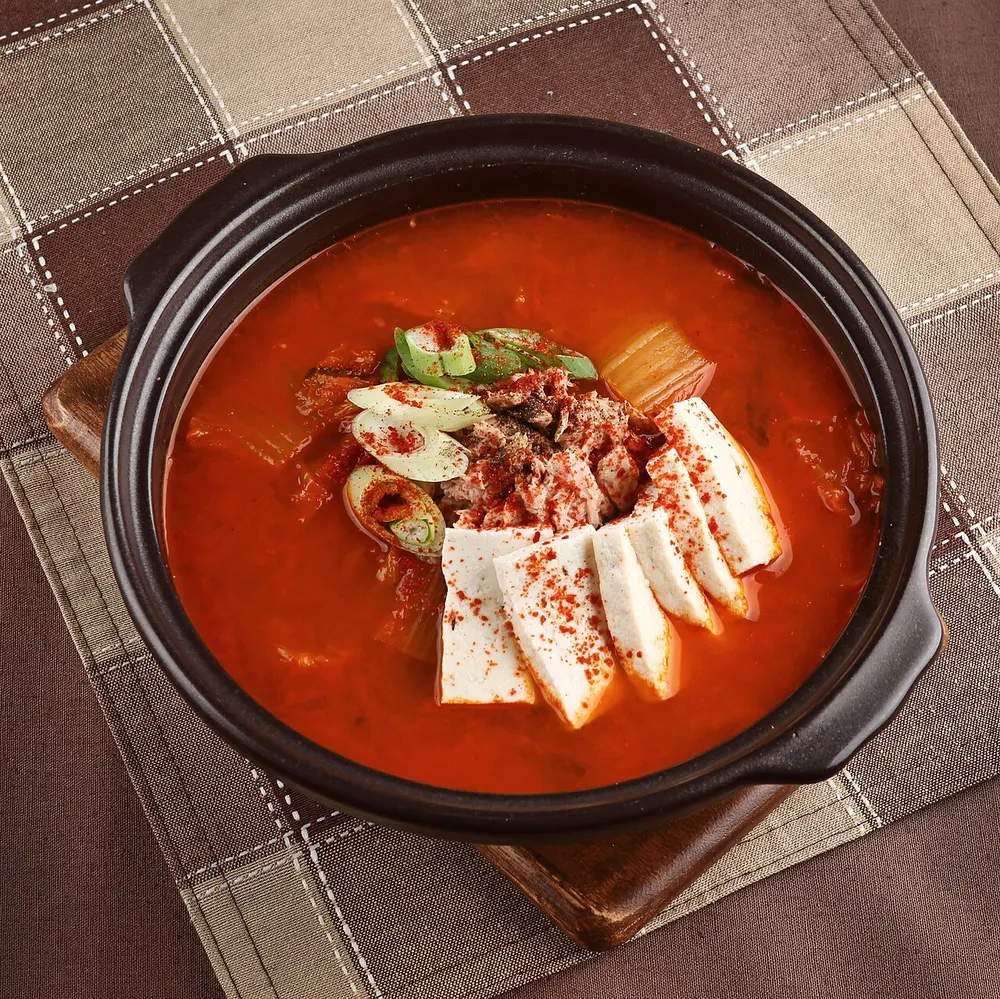
Kimchi Jjigae (Kimchi Stew)
Fuente: Tradicional
30 min3420 kcal
Sin lácteos🌶️🌶️
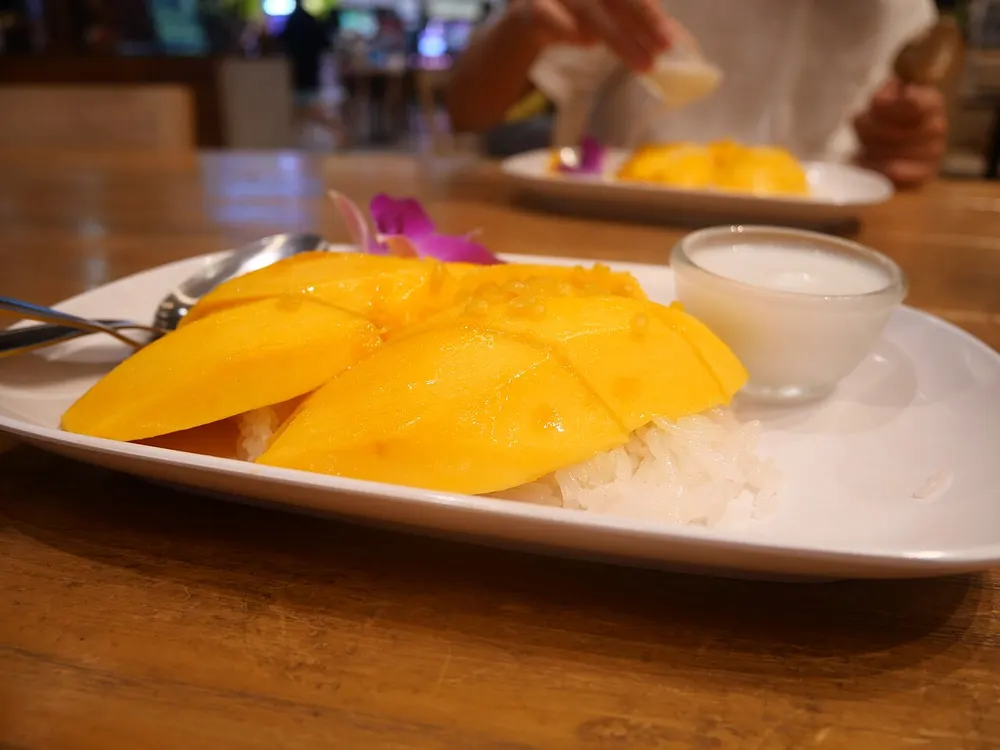
Steamed sticky rice soaked in salted-sweet coconut milk while it is still hot, served warm beside cold ripe mango with a spoonful of salty coconut cream poured over. Three ingredients, and the salt is the one everybody underuses.
Fuente
Receta de Central Thai home kitchens · 🏺 Tradicional · Household cooking of the Chao Phraya plain — the Bangkok-centred style most of the world means by 'Thai food'
Thai dessert · traditional dish — An ownerless traditional dessert, so no cook is credited. The cited article confirms the Thai name khao niao mamuang, the core of glutinous rice, coconut milk, sugar and salt with optional roasted mung bean and toasted sesame toppings, and the preferred cultivars nam dok mai and ok rong. It notes the dessert is usually eaten during the peak mango season of April and May, traces its origins in Thailand to the late Ayutthaya period where records mention a fondness for sweets including the ok rong mango, and records that during the reign of King Chulalongkorn the dish — then called khao niao moon — was eaten with ripe mango. Quantities and method here are this book's own.
Watch it being made · 3 videos
Drain the soaked rice and spread it in a steamer lined with muslin or a clean cloth. Steam over boiling water for 25 minutes, turning the rice over halfway through.
💡 Steam, never boil. Sticky rice cooked in water becomes porridge — the whole technique is that the grains cook in vapour and stay separate.
While it steams, warm the 250 ml of coconut milk with the sugar, salt and knotted pandan until the sugar dissolves. Do not let it boil.
Tip the hot rice into a bowl and pour the warm sweet coconut milk straight over it. Fold it through once, cover, and leave it for 20 minutes.
💡 It will look far too wet at first. Give it the full 20 minutes — the rice drinks nearly all of it, and rushing this step is why home versions come out dry.
Make the topping: whisk the rice flour into the 120 ml of coconut cream with the salt and warm it gently, stirring, until it just thickens. Take it off the heat.
Peel the mangoes and slice the cheeks off either side of the stone, then cut each cheek into thick slices. Keep them cold.
Mound the warm rice on a plate, lay the cold mango beside it, spoon the salty coconut sauce over the rice and scatter the toasted mung beans. Serve straight away.
💡 Warm rice against cold fruit is not an accident. Chilling the whole plate makes the rice hard and dulls the coconut — this dessert does not keep in the fridge.
Korean
Fuente: Tradicional
Korean
Fuente: Cocina casera
Korean
Fuente: Cocina casera
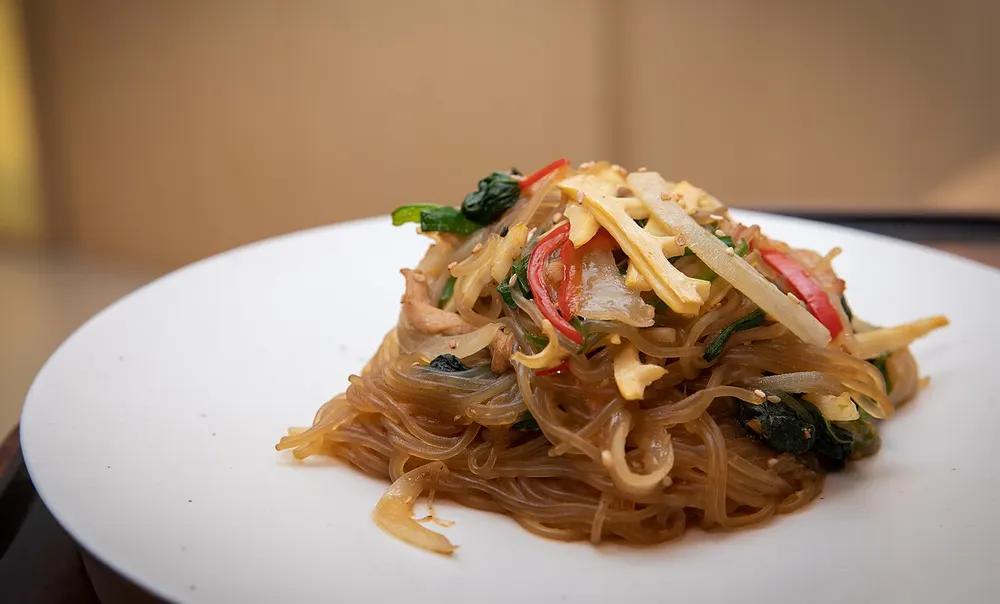
Korean
Fuente: Tradicional
¿Lo has preparado? Comparte una foto en la Vitrina.
Comparte tu creación →