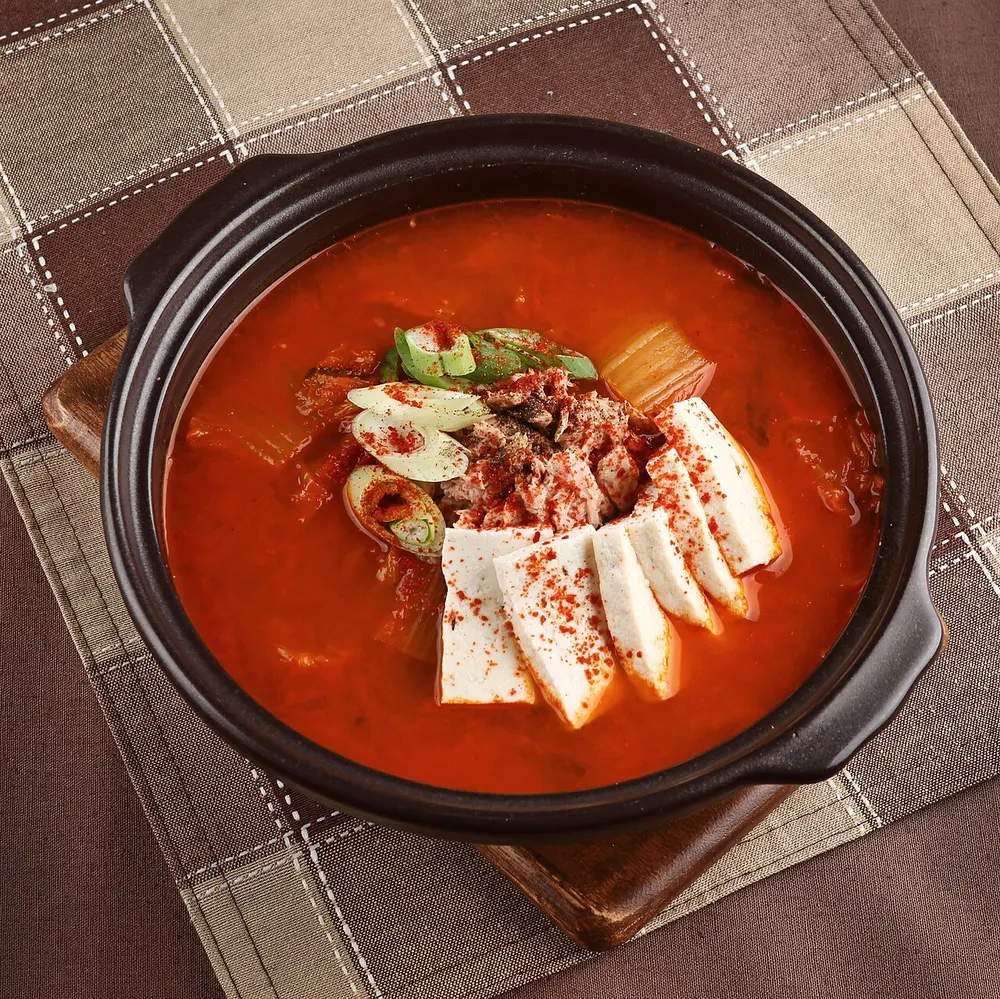
Principiante
Korean
Kimchi Jjigae (Kimchi Stew)
Fuente: Tradicional
30 min3420 kcal
Sin lácteos🌶️🌶️
Tteokbokki before it was red. Soy sauce, beef and shiitake instead of gochujang, with the marinated meat fried first so its juices become the broth the rice cakes finish in. Not a trace of chili.
Fuente
Receta de 꿀키 (Honeykki) · 📱 Influencer · Korean cooking YouTuber known for quiet, high-craft videos; publishes her recipes in Korean and English in each description
Los nombres de cocineros y creadores aparecen únicamente como crédito de la fuente. More Recipes Please es independiente y no está afiliada, respaldada ni patrocinada por ellos.
Recipe published by Honeykki / 꿀키가 공개한 레시피 — Honeykki publishes this recipe in full, in both Korean and English, in the video's description — ingredients with amounts plus five numbered steps. She explains that gungjung tteokbokki is the traditional court version, flavoured with soy sauce rather than gochujang, and recommends it to anyone who cannot handle spice. Distinctive: the entire sauce is used as a marinade for the beef and shiitake, which are fried before the water goes in — she writes that this is what draws a broth out of them and makes it so much better. One honest caveat: her Korean and English ingredient lines disagree (beef 100 g vs 150 g; 양파/onion rendered as 'green onion'); the Korean original is followed here.
Cocinero: 꿀키 (Honeykki)
Watch it being made · 3 videos
Soak the rice cakes in warm — not boiling — water. Honeykki notes that if yours are already soft you can skip this entirely.
💡 Warm water relaxes them; boiling water starts cooking the outside into mush while the middle stays hard.
Slice the beef yourself rather than reaching for mince, and press the cut surfaces with kitchen paper to lift the blood off.
💡 Both are Honeykki's own notes, and both are about clarity: blood left on the beef clouds the sauce and dulls the clean soy flavour this dish depends on.
Slice the shiitake mushrooms into strips.
Stir the soy sauce, sugar, mirin, sesame seeds, sesame oil, minced garlic and black pepper together, and turn the beef and mushrooms through it. Leave them to sit while you cut the vegetables.
💡 Note where the sauce goes: all of it becomes the marinade. There is no separate seasoning poured in later — this one bowl is the whole flavour of the dish.
Cut the carrot, bell pepper and onion to roughly the same size as the rice cakes.
💡 Matching the sizes is not fussiness — it is how everything lands in the same spoonful and finishes cooking at the same moment. Honeykki adds that the vegetables are yours to change.
Set a pan over medium heat and add the marinated beef and mushrooms, scraping in every drop of the marinade with them.
Stir-fry until the beef has lost its red and the mushrooms have softened and darkened.
Pour in the 150 ml of water and bring it down to a gentle, murmuring simmer.
Let it simmer until the liquid stops tasting like watery soy sauce and starts tasting like broth — the beef and shiitake are giving themselves up to it.
💡 This is the step that makes the recipe. Honeykki says frying the meat and mushrooms first and adding water after is exactly why it tastes so much better — a broth builds itself in the pan with no stock made.
Add the soaked rice cakes along with the carrot, bell pepper and onion.
Keep stirring over medium heat until the vegetables wilt and the rice cakes turn soft and chewy.
💡 Keep the spoon moving. Rice cakes sink and weld themselves to the pan the second you stop, and there is not much liquid here to protect them.
Cook it down until the sauce has reduced to a glaze that coats each rice cake in glossy brown rather than sitting around them.
Taste before serving and adjust with a splash more soy if it is flat — brands vary, and there is no chili here to hide behind.
Serve it warm. It is good at room temperature too, which is more than can be said for the red kind.
Korean
Fuente: Tradicional
Korean
Fuente: Cocina casera
Korean
Fuente: Cocina casera
Korean
Fuente: Tradicional
¿Lo has preparado? Comparte una foto en la Vitrina.
Comparte tu creación →