Principiante
Korean
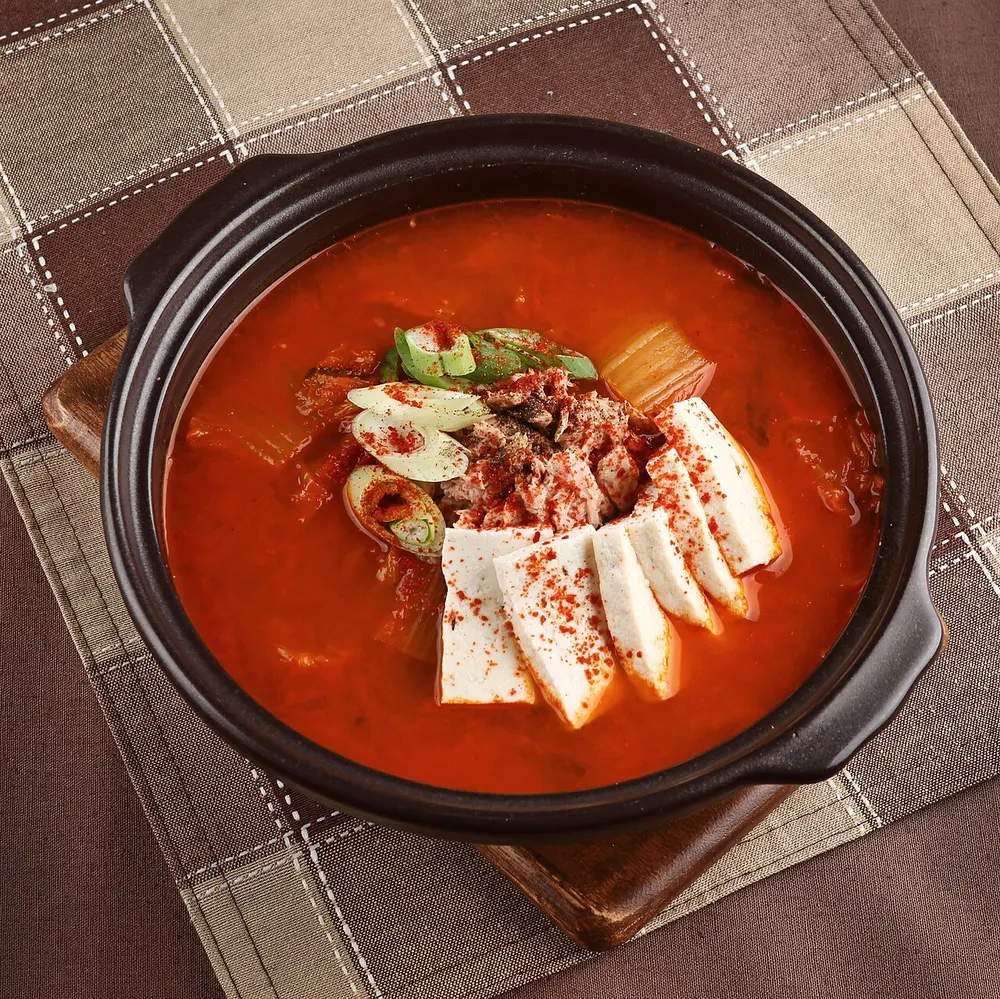
Kimchi Jjigae (Kimchi Stew)
Fuente: Tradicional
30 min3420 kcal
Sin lácteos🌶️🌶️
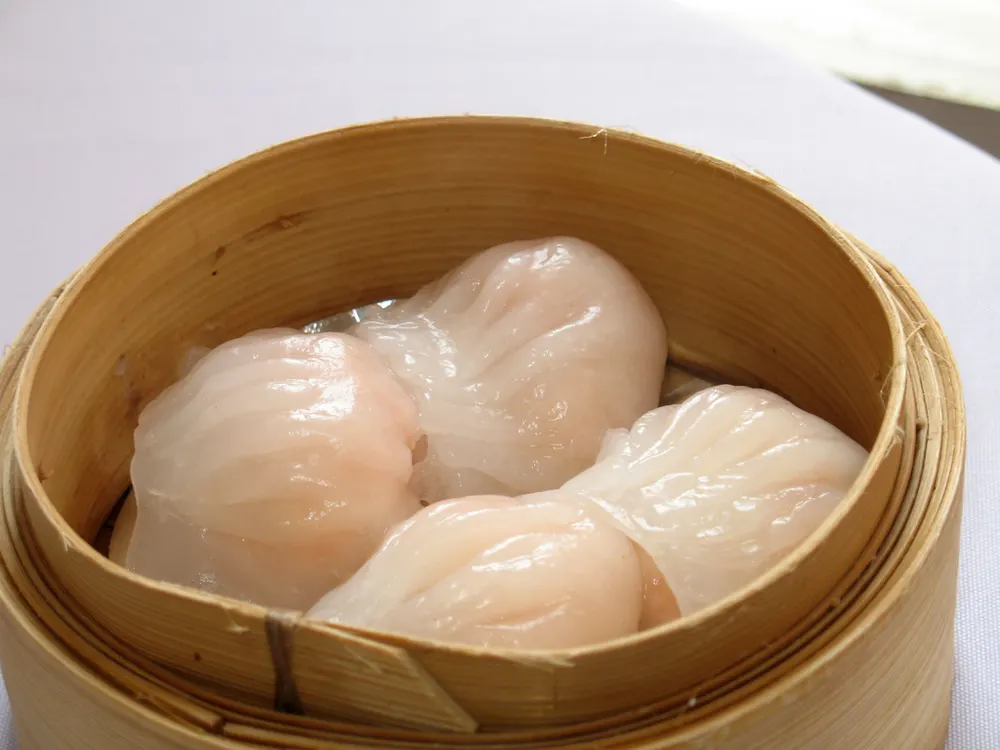
Whole prawns wrapped in a wheat-starch skin that steams to near-transparency, pleated into a crescent so the pink shows through — the dish every dim sum kitchen is judged on.
Fuente
Receta de Cantonese dim sum kitchens · 🏺 Tradicional · From the Guangzhou teahouse tradition — no single author
Cantonese dim sum / 廣東點心 — Har gow is a Cantonese dim sum dumpling of shrimp in a wheat-starch wrapper that steams to near-transparency, which is why it is also called 水晶蝦餃, 'crystal shrimp dumpling'. It is credited to the Yi Zhen restaurant in Wufeng Village near Guangzhou, where it was first sold as 'Wufeng har gow'. Tradition holds a dim sum chef to at least seven pleats on the wrapper, and preferably ten or more.
Watch it being made · 3 videos
Pat the prawns thoroughly dry. Chop one-third to a rough paste and leave the rest whole or halved lengthways.
💡 The two textures together are the point: the paste binds the filling into one mass, the whole pieces give you something to bite. All-paste har gow eats like a fish cake.
Mix the prawns with the salt, sugar, white pepper, sesame oil, cornstarch, bamboo shoots and diced pork fat. Stir in one direction for a minute until it turns sticky.
💡 One direction only. Stirring back and forth breaks the protein strands you are trying to line up, and the filling stays loose instead of holding together in the steamer.
Cover the filling and chill it for 30 minutes while you make the dough.
Whisk the wheat starch and tapioca starch together in a heatproof bowl.
Pour the 150 ml of furiously boiling water in all at once, stirring hard with a chopstick as you go, until it forms a shaggy, translucent mass.
💡 This is where har gow is won or lost. The water must be boiling, not hot — wheat starch only gelatinises above about 90°C, and water that has cooled on the way over gives you a crumbly dough that cracks at every fold.
Cover the bowl and leave it 5 minutes to steam itself through, then knead in the lard while it is still hot enough to be just bearable.
💡 Knead it hot. Once the dough cools it stops being workable, and no amount of kneading later will bring the stretch back.
Knead 3–4 minutes to a smooth, putty-like ball, then keep it under a damp cloth at all times.
💡 'At all times' is literal. This dough skins over and turns unusable within about two minutes of air exposure — cover the ball, and cover the wrappers you have rolled.
Roll the dough into a log and cut it into 20 equal pieces, keeping all but the one you are working on under the cloth.
Oil a cleaver blade or the flat of a knife lightly and press each piece into a thin round about 8 cm across.
💡 Pressing with an oiled blade is the traditional method and it is faster and more even than a rolling pin, because this dough is too soft and sticky to roll well.
Put a heaped teaspoon of filling in the centre, fold into a half-moon, and seal the far edge shut.
Now pleat the front edge only, pushing small folds along it with your thumb while the back stays smooth — aim for seven pleats at minimum, ten or more if you can.
💡 Seven pleats is the traditional minimum a dim sum chef is held to, and ten or more is the mark of a good one. Yours will be lumpy at first; they still taste right, so make them anyway.
Line a bamboo steamer with parchment or oiled cabbage leaves and set the dumplings in with a finger's gap between them.
Steam over hard-boiling water for exactly 6–8 minutes, until the wrappers turn from white to translucent and the prawns glow pink through them.
💡 Do not overshoot. Past about 9 minutes the prawns tighten and squeak and the wrapper starts to sag and tear under its own weight — har gow does not forgive a long steam.
Serve them in the steamer at once, while the skins are still taut and shining.
Korean
Fuente: Tradicional
Korean
Fuente: Cocina casera
Korean
Fuente: Cocina casera
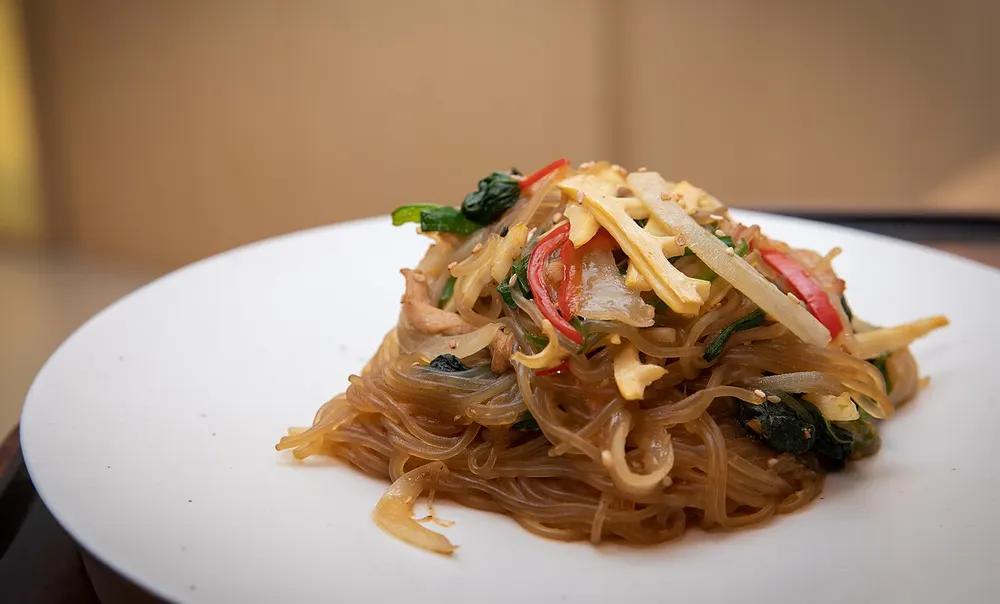
Korean
Fuente: Tradicional
¿Lo has preparado? Comparte una foto en la Vitrina.
Comparte tu creación →