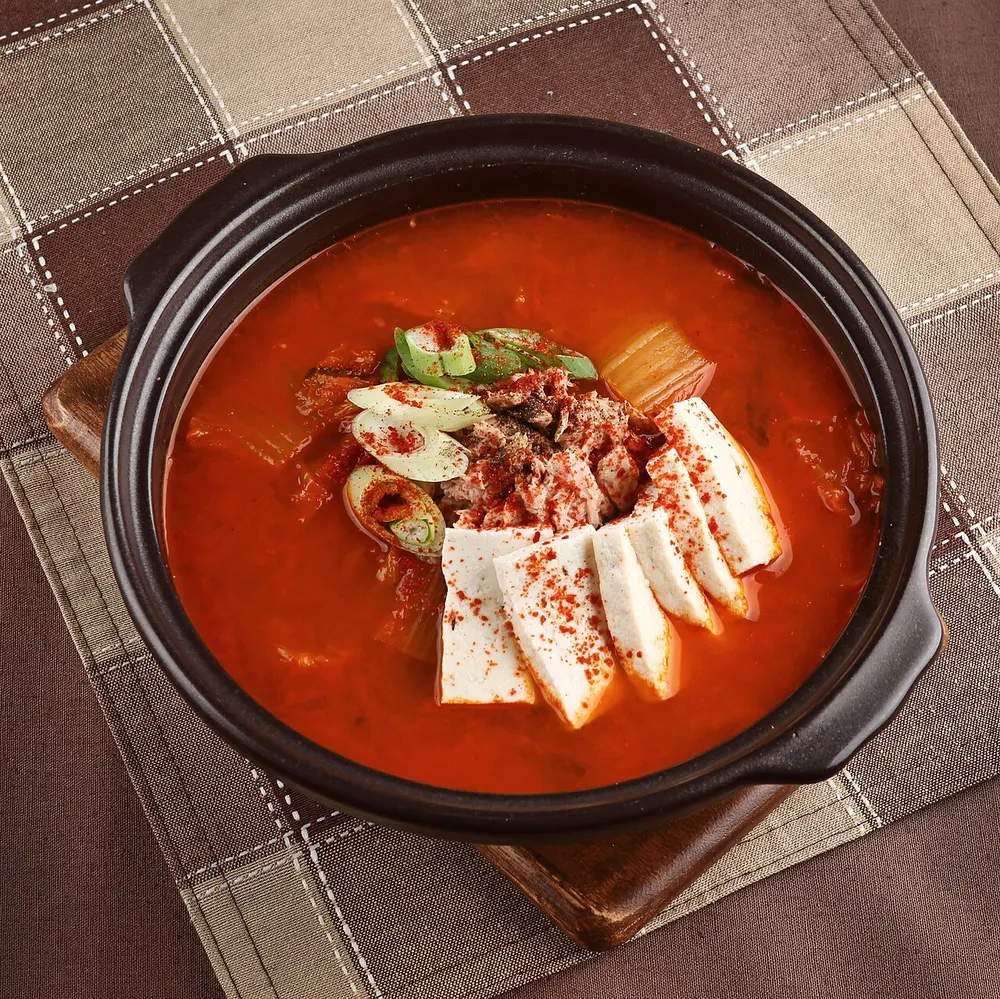
Principiante
Korean
Kimchi Jjigae (Kimchi Stew)
Fuente: Tradicional
30 min3420 kcal
Sin lácteos🌶️🌶️
A court salad built on restraint: bamboo shoot, beef and shiitake each cooked and cooled separately, laid out facing one another rather than tossed, and dressed at the very last second with a soft persimmon whisked into vinegar and honey.
Fuente
Receta de 한복려 · 👨🍳 Chef · Han Bok-ryeo — researcher of Joseon royal court cuisine; holder of National Intangible Cultural Heritage no. 38 (Joseon royal court cuisine) since 2007; director of the Institute of Korean Royal Cuisine
Los nombres de cocineros y creadores aparecen únicamente como crédito de la fuente. More Recipes Please es independiente y no está afiliada, respaldada ni patrocinada por ellos.
MBN Altoran (알토란) — cook's own published recipe — Published by MBN on 알토란's own channel (알토란 - 집밥 레시피, @Recipe_MBN); the description opens '알토란 419회 한복려 레시피 MBN 230108' and prints her ingredient list and numbered method. Broadcaster-published text, not a viewer's write-up. Two things mark her version: the dressing is a sieved soft persimmon — no oil at all, with vinegar and honey doing the lift — and the beef and shiitake are seasoned from the same bowl of sauce but dressed and fried strictly separately. We flag rather than fill one gap: minari and bean sprouts are in her ingredient list, but her published method never says how to prepare them, so the blanching in step 9 is our own standard-practice reading.
Cocinero: 한복려
Watch it being made
If your bamboo shoots are salt-cured, soak them in several changes of cold water to pull the salt out, then boil them until they lose their raw, chalky edge.
💡 She gives no timing here. Ours: taste a sliver after each water change — when it tastes of bamboo rather than brine, it is done. Skimping leaves the whole salad salty before you have added a single seasoning.
Slice the boiled shoots lengthways into thin combs — keep the natural fan of the ridges — then fry them in a little oil with a pinch of salt and spread them out to cool.
💡 Cooling matters as much as cooking. Every element in a chae goes onto the plate at room temperature — warm ingredients sweat, and the moisture thins the dressing into a puddle.
Stir the beef-and-shiitake seasoning together: 1 tbsp soy sauce, ½ tbsp sugar, 2 tsp minced green onion, 1 tsp minced garlic, 2 tsp ground sesame, 1 tsp sesame oil and a pinch of pepper.
Dress the shredded beef and the rehydrated shiitake with that seasoning — in SEPARATE bowls, not together.
💡 Her method is explicit about this ('소고기, 표고 따로 따로'). Shiitake is a sponge — mixed together it soaks up the seasoning meant for the beef, and you end up with salty mushrooms next to bare meat.
Put the beef in a pan with 1 tbsp of water and stir-fry over medium until it turns from red to grey-brown and the liquid has gone, 2–3 minutes.
💡 The tablespoon of water is deliberate — it lets the seasoned beef steam loose instead of clumping and searing. Shredded beef hitting a dry hot pan welds into a single knot.
Push the beef to one side of the pan and fry the seasoned shiitake in the space you just made. Turn both out onto a plate and let them cool completely.
Fry the separated egg into thin yellow and white sheets and shred them. Shred the red chili fine as well.
Peel the persimmon and push the flesh through a sieve to get roughly 4 tbsp of smooth pulp.
💡 Sieve, don't blend. A blender whips in air and pulverises the seeds and skin flecks; the sieve gives you clean pulp and nothing else. This dressing has no oil in it at all — the persimmon is doing the body.
Blanch the minari and the bean sprouts briefly in salted water, refresh them in cold water and squeeze them dry. Cut the minari into 3–4 cm lengths.
💡 This step is OURS, not hers: her published method covers the bamboo, beef, shiitake, plating and dressing but never says what to do with the minari and sprouts, even though both are in her ingredient list. Blanching is the standard court treatment; we are naming the gap rather than pretending it isn't there.
Plate it: bamboo shoots in the centre, and the other elements arranged around them facing one another — beef opposite shiitake, minari opposite sprouts.
💡 Facing one another, not tossed. That is the whole grammar of a 채 — each ingredient keeps its own colour and texture, and the eater does the mixing at the table.
Lay the shredded egg and red chili over the top as the last colours.
Whisk the sieved persimmon with 2 tbsp vinegar, 1 tbsp honey, ½ tbsp soy sauce and ⅓ tbsp salt until it is smooth and pourable.
Serve the dressing in its own dish and pour it over ONLY at the moment of eating — this is her explicit instruction.
💡 Dress it early and it is ruined: the vinegar leaches water out of the bamboo and sprouts, and within ten minutes a crisp salad is sitting in pink liquid. This is the single most common way people wreck a 채.
At the table, mix everything through gently with chopsticks and eat straight away, while the bamboo still snaps.
Korean
Fuente: Tradicional
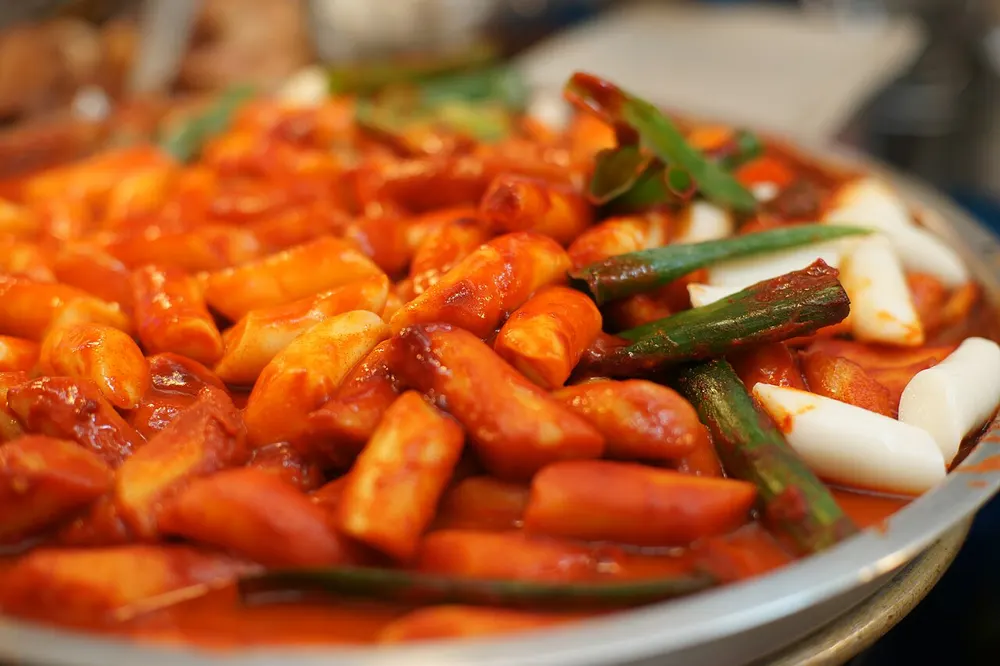
Korean
Fuente: Cocina casera
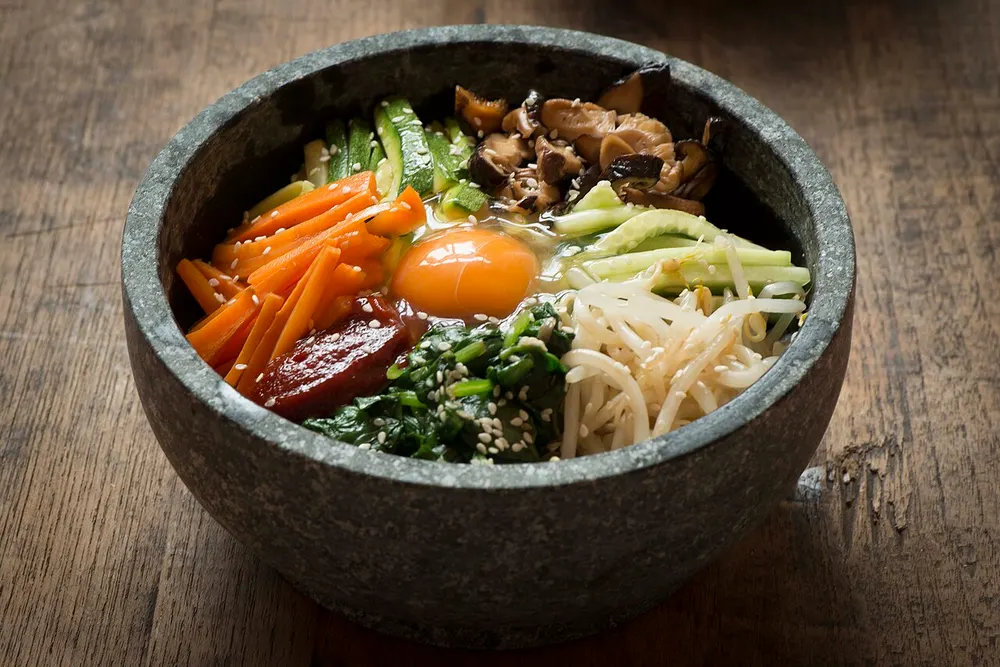
Korean
Fuente: Cocina casera
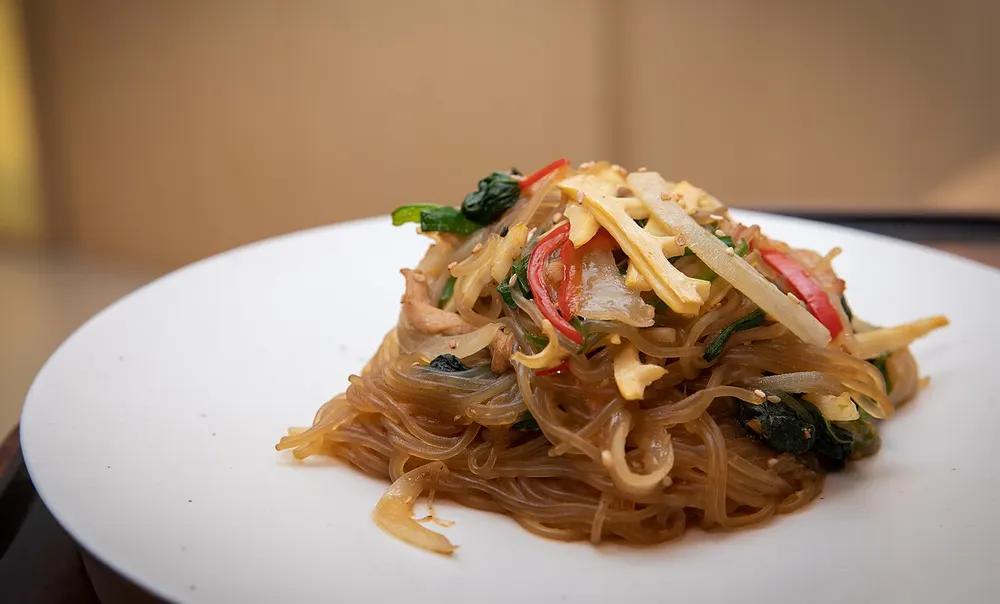
Korean
Fuente: Tradicional
¿Lo has preparado? Comparte una foto en la Vitrina.
Comparte tu creación →