Principiante
Korean
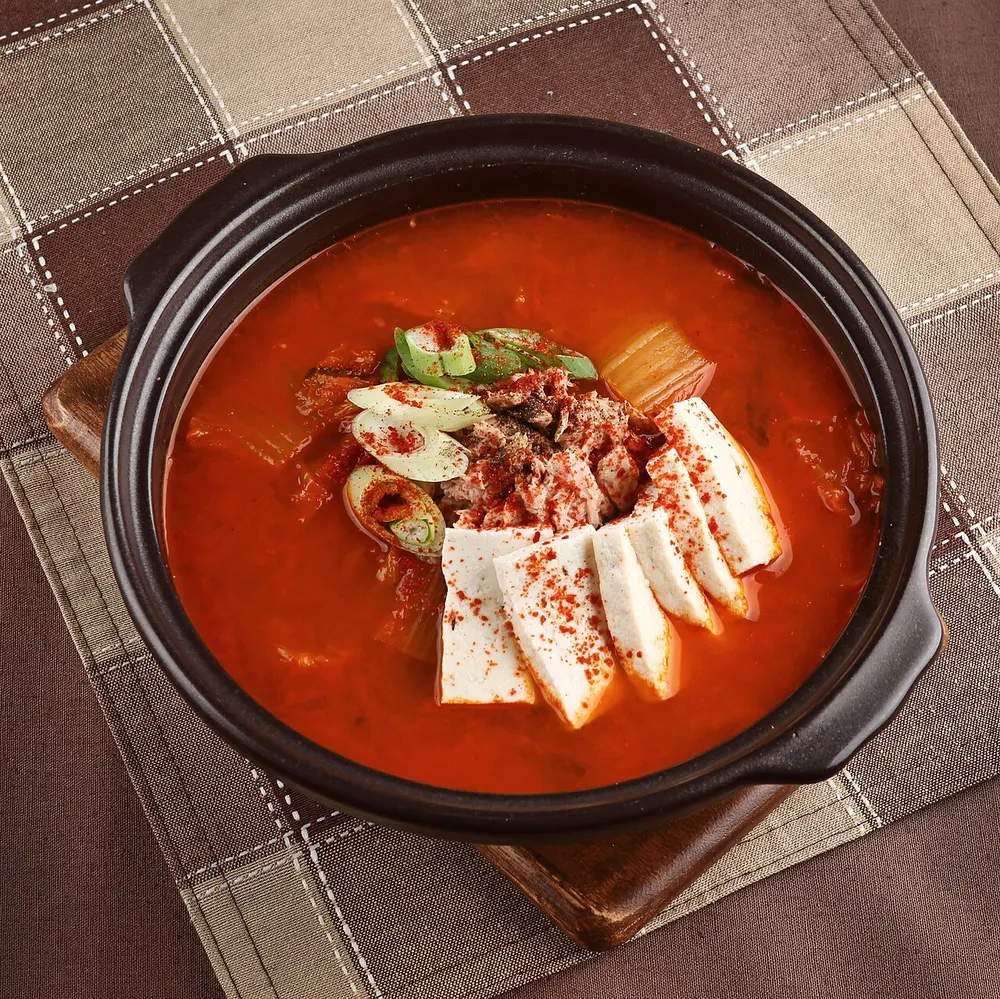
Kimchi Jjigae (Kimchi Stew)
Fuente: Tradicional
30 min3420 kcal
Sin lácteos🌶️🌶️
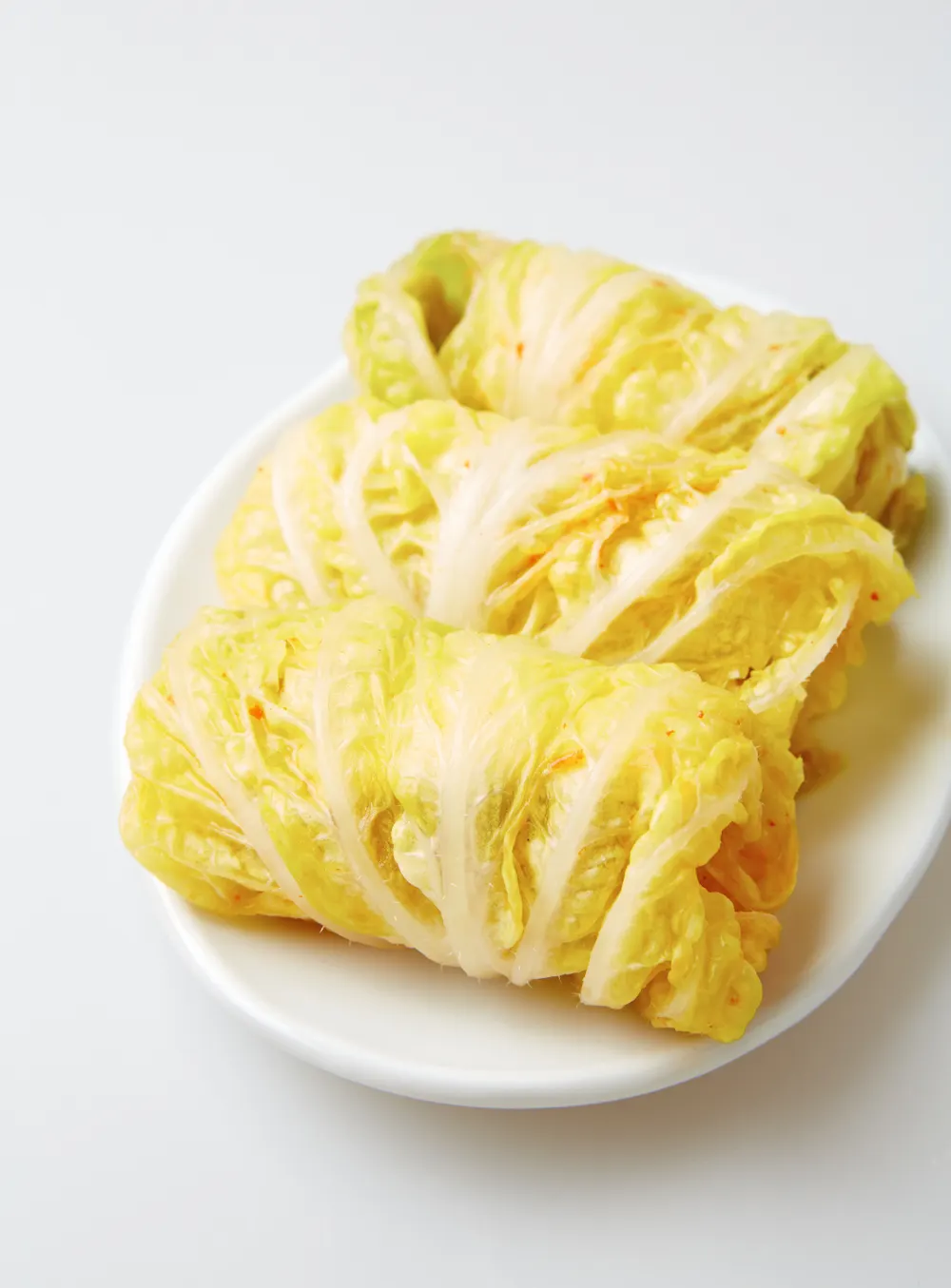
Kimchi as a gift-wrapped parcel: the outer cabbage leaves are saved whole, then used to bundle a filling of radish, pear, chestnut, octopus and oysters, crowned with pine nuts, jujube and shredded chili before the leaf folds over it.
Fuente
Receta de 한복려 · 👨🍳 Chef · Han Bok-ryeo — researcher of Joseon royal court cuisine; holder of National Intangible Cultural Heritage no. 38 (Joseon royal court cuisine) since 2007; director of the Institute of Korean Royal Cuisine
Los nombres de cocineros y creadores aparecen únicamente como crédito de la fuente. More Recipes Please es independiente y no está afiliada, respaldada ni patrocinada por ellos.
MBN Altoran (알토란) — cook's own published recipe — Published by MBN on 알토란's own channel (알토란 - 집밥 레시피, @Recipe_MBN); the description opens '알토란 419회 한복려 레시피 MBN 230108' and prints her ingredient list in grams and cups plus her four-stage method. Broadcaster-published text, not a viewer's write-up. The moves that mark it as hers: the wide outer leaves are peeled off whole and kept as wrappers before anything is cut; the chili powder goes in alone first to colour the radish before any garlic or jeotgal; the garnish is laid on top of the filling so it faces the diner when the parcel is turned out; and the packed crock is finished with a clear strained croaker brine. We flag rather than fill one gap: her garnish list gives an amount only for the shredded chili (10 g), and she states no fermentation time.
Cocinero: 한복려
Watch it being made
Strip the tough outer leaves off each cabbage and halve them. Sprinkle a little salt directly onto the thick white root end of each half.
💡 The root end is dense and salts slowest; the leaf tips are thin and salt fastest. That extra pinch on the stem is how she gets both ends of the same cabbage ready at the same moment.
Dissolve the coarse salt in 2 litres of water, submerge the halves cut-side UP, packed neatly into a crock, and leave them 6 hours. Cut the radish into rounds and brine it alongside.
💡 Six hours is her figure — hold to it. Test by bending a stem: it should fold like leather without snapping. Under-brined cabbage will not wrap; over-brined cabbage tears as you fold it.
Rinse and drain. Cut any oversized halves in half again and trim the root cleanly away. Now carefully peel off the wide green outer leaves ONE BY ONE and set them aside — these are your wrappers.
💡 Take your time here — a torn wrapper is a parcel you cannot close. Peel from the root end, and if a leaf resists, run a knife under it rather than pulling harder.
Cut the leaf-stripped cabbage into 3 cm strips. Cut the brined radish and the pear to the same size, and slice the chestnuts into thin coins.
Cut the gat, minari and chives into 3 cm lengths, slice the green onion on the diagonal, and cut the cleaned octopus into 3 cm pieces.
Filling, stage one: put the chili powder in with the cut radish and toss it alone until the radish glows red all over. Only then work in the minced garlic and ginger.
💡 Colour first, everything else after. Chili powder needs a moment against wet radish to bloom; throw it in with the fish sauce and garlic all at once and it never stains properly — you get a pink kimchi with gritty powder in it.
Add the gat, minari, chives and green onion, then the salted shrimp and salted croaker. Taste and adjust the salt to your own liking — she leaves that to you.
💡 Taste before you salt, always. The cabbage and radish already carry six hours of brine, and jeotgal varies wildly in saltiness from jar to jar. Kimchi you can add salt to; kimchi you cannot take it out of.
Stir in the sugar, then fold through the octopus and the pear last, gently, so the pear stays in pieces.
Line a small bowl with one of the saved leaves, stem end down, and let the leaf drape outward over the rim like an open cloth.
💡 The bowl is a mould, and it is the trick that makes this manageable. Trying to build a parcel flat on the board is how beginners end up with filling everywhere.
Pack about a fistful of the mixed filling into the lined bowl.
Crown it with the good bits — pine nuts, shredded chili, oysters, octopus, seogi and shiitake — then fold the draped leaf over the top, tucking it down snugly to close the parcel.
💡 The garnish goes on top, meaning it ends up at the BOTTOM of the parcel — so when you turn it out to serve, the jewels are the first thing you see. That reveal is the entire point of bo-kimchi.
Pack the parcels seam-side down into a crock or container, cover them with the reserved tough outer leaves (우거지) and press them down firmly.
Strain the salted croaker into a clear brine and pour just enough over to come up around the parcels. Cover and leave it to ferment.
💡 She gives no fermentation time or temperature — that is genuinely up to your kitchen. Our guide: a day at cool room temperature to start it, then into the fridge; taste from day three. The parcels are meant to be eaten young, while the oysters are still sweet.
To serve, lift one parcel onto a plate and turn it over so the garnish shows, and cut it open at the table.
Korean
Fuente: Tradicional
Korean
Fuente: Cocina casera
Korean
Fuente: Cocina casera
Korean
Fuente: Tradicional
¿Lo has preparado? Comparte una foto en la Vitrina.
Comparte tu creación →