Foto próximamente
Principiante
American
Fluffy Buttermilk Pancakes
Fuente: Cocina casera
25 min4350 kcal
Vegetariano
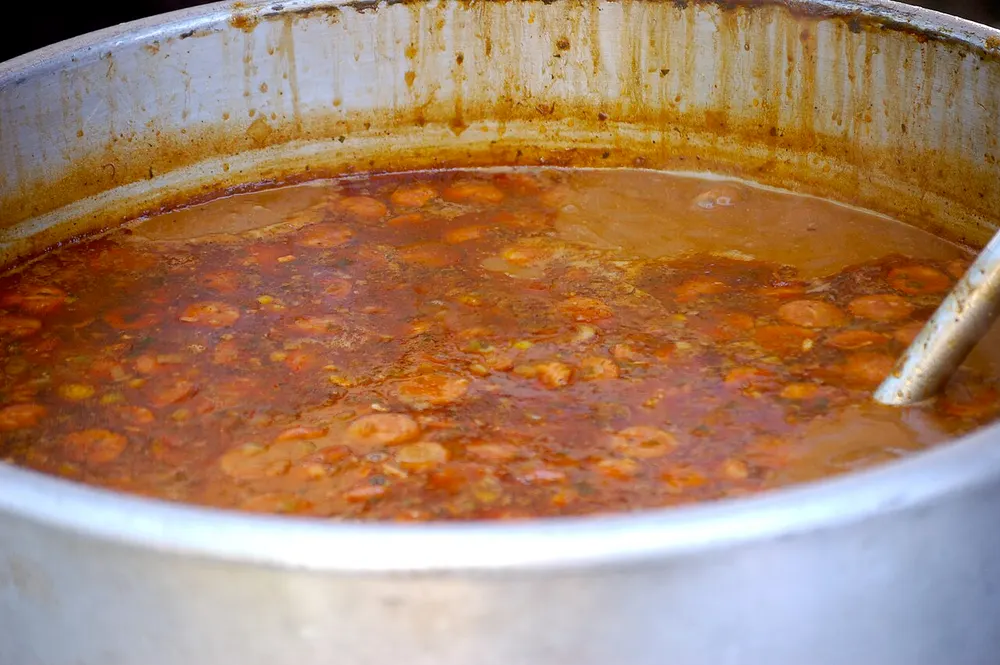
Louisiana's official state stew, built on a dark roux stirred patiently to the colour of milk chocolate, the Creole 'holy trinity' of onion, celery and bell pepper, and smoked sausage. Served over rice.
Fuente
Receta de Louisiana Creole & Cajun kitchens · 🏺 Tradicional
Louisiana Creole / Cajun — A stew of the U.S. Gulf Coast and the official state cuisine of Louisiana. It is built from a strongly flavoured stock, meat or shellfish, a thickener, and the Creole 'holy trinity' of celery, bell peppers and onions, and is usually categorised by whether it is thickened with okra, filé powder, or neither.
Watch it being made · 3 videos
Season the chicken thighs with salt. Brown them skin-side down in a heavy pot over medium-high heat for 5 minutes a side, then set them aside. Brown the sausage rounds in the same fat for 3 minutes and set aside too.
💡 You are after the browned bits stuck to the pot, not cooked-through meat. Those are pure flavour and the stock will dissolve them later.
Dice the onion, celery and bell pepper and have them in a bowl right next to the stove. Mince the garlic separately.
Pour off all but 80 ml of fat, or top it up with fresh oil to reach 80 ml. Warm it over medium heat, then whisk in the flour all at once until smooth.
💡 Equal weights of flour and fat. This is the moment the gumbo begins — from here you cannot walk away from the pot.
Now stir the roux constantly over medium-low heat for 30–45 minutes. It will go blonde, then peanut butter, then copper, and finally the colour of milk chocolate. Do not stop stirring.
💡 This is the hardest 40 minutes in American home cooking and there is no shortcut. The flour is toasting, and toasted flour thickens less but tastes incomparably deeper — that trade is the whole point of a dark roux.
Watch for black specks. If any appear, throw the roux out, wash the pot and start again.
💡 A burnt roux is bitter all the way through and there is no rescuing it — no amount of stock, salt or sausage will cover it. Every Louisiana cook has thrown one away. Better 10 minutes lost than 2 hours.
The instant the roux hits milk-chocolate brown, tip in the onion, celery and bell pepper all at once and stir hard. The pot will hiss and drop in temperature.
💡 The vegetables are the brake. They stop the roux cooking any further — which is exactly why they had to be chopped and waiting before you started stirring.
Cook the vegetables in the roux for 8–10 minutes over medium heat, until the onion is soft and translucent, then stir in the garlic and cook 1 minute more.
Add the warm stock a ladleful at a time, stirring each one in completely before the next. The mixture will loosen from a paste into a thick, glossy gravy.
💡 Warm stock into hot roux. Cold liquid hitting hot roux seizes it into lumps that will not whisk out — the same rule as any gravy, just less forgiving.
Return the chicken and sausage to the pot with the bay leaves, thyme, cayenne and smoked paprika. Bring to a bare simmer.
Simmer uncovered on low for 60 minutes, stirring every 15. Orange-brown oil will rise to the surface — skim it off with a spoon.
💡 That surface oil is roux fat separating out, and skimming it is traditional — it is the difference between a gumbo that tastes rich and one that tastes greasy.
Lift out the chicken, pull the meat off the bones in large shreds, discard the skin and bones, and return the meat to the pot.
Simmer 15 minutes more, then taste and adjust salt and cayenne. The gumbo should coat a spoon but still pour — thinner than a stew, thicker than a soup.
💡 Season only now. An hour of open simmering has concentrated everything, and the sausage has been quietly salting the pot the whole time.
Fish out the bay leaves. Stir through most of the spring onions and parsley, keeping a little back.
Spoon a mound of hot rice into each bowl and ladle the gumbo around it. Scatter the reserved herbs on top and pass the filé powder at the table.
American
Fuente: Cocina casera
American
Fuente: Cocina casera
Modern
Fuente: Tradicional

Modern / viral
Fuente: Influencer
¿Lo has preparado? Comparte una foto en la Vitrina.
Comparte tu creación →