Beginner
Korean
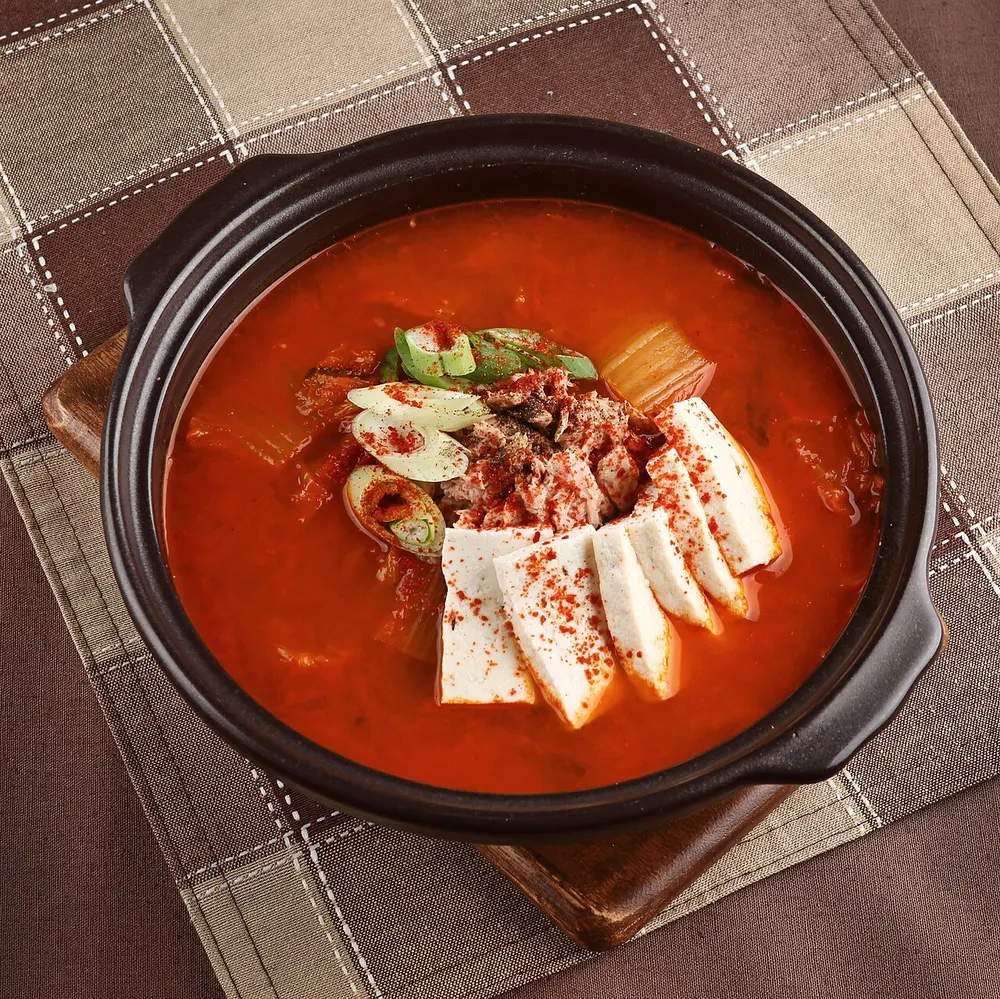
Kimchi Jjigae (Kimchi Stew)
Source: Traditional
30 min3420 kcal
Dairy-free🌶️🌶️
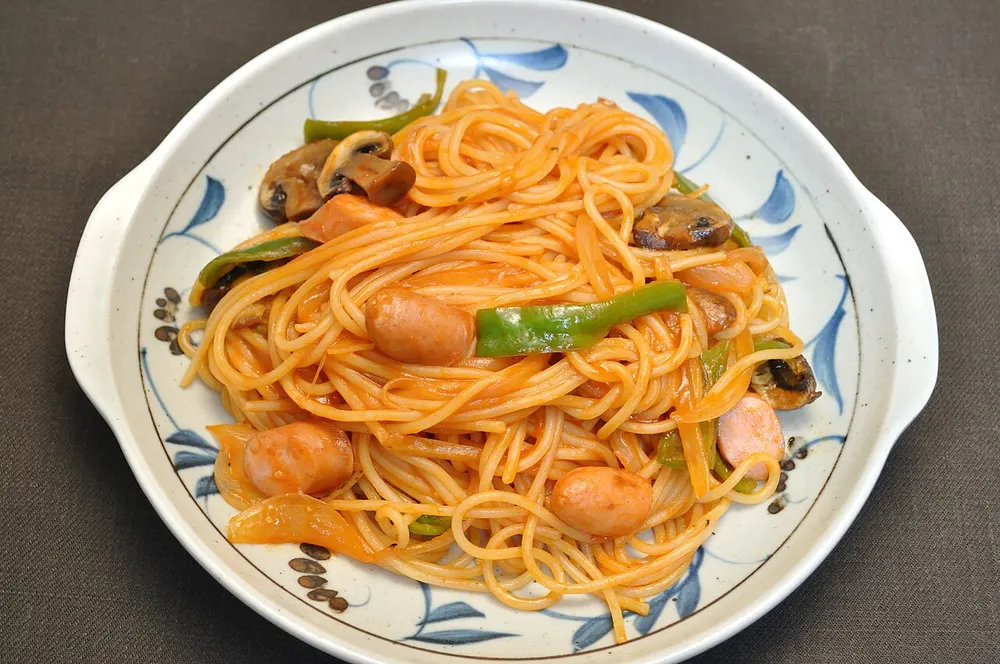
Japan's ketchup spaghetti, cooked entirely in one frying pan — the dry pasta goes straight into 360 cc of consommé water in the pan and boils there for 7 minutes, drinking the sauce as it softens. The ketchup goes in twice, before and after.
Source
Recipe by リュウジ · 📱 Influencer · Ryuji — cooking researcher (料理研究家) and YouTuber behind 料理研究家リュウジのバズレシピ, Japan's biggest cooking channel at ~5.6M subscribers. Known for fast, exactly-measured home recipes.
Names of cooks and creators appear as source credit only. More Recipes Please is independent and is not affiliated with, endorsed by, or sponsored by them.
Ryuji (バズレシピ) — Published by リュウジ on his own YouTube channel as 【至高を越えたナポリタン】, made in a single frying pan. The description carries the full ingredient list and his method as text, and that is the source of every quantity here. Two things define his version. The dry pasta never meets a pot of boiling water: it goes straight into 360 cc of consommé water in the same pan the aromatics were fried in and boils there for 7 minutes, so its starch thickens the sauce instead of going down the drain. And the ketchup is split in two — 大さじ3 fried hard at the start until it darkens and turns savoury, then 小さじ2 more stirred in at the end to bring back the fresh tomato note the frying cooked off. Napolitan itself is a Japanese 洋食 invention, not an Italian dish, which is why this is filed under Japan.
Cook: リュウジ
Watch it being made
Slice the sausages on the diagonal, the onion (50 g) thinly, and the mushrooms (40 g). Chop the garlic. Cut the green pepper (30 g) into rings and keep it separate from everything else.
Heat the oil (小さじ1) in a wide frying pan over medium heat and fry the sausage, garlic and onion for 2–3 minutes, until the onion turns translucent and the sausage edges brown.
Add the mushrooms (40 g) and fry another 2 minutes, until they have given up their water and started to colour.
Add the ketchup (大さじ3) and the Worcestershire sauce (小さじ1) and fry them — actively, in the hot pan, for about 1 minute, until the ketchup darkens from bright red to brick and smells roasted rather than sweet.
💡 Frying the ketchup is the single most important step in any napolitan. Raw ketchup tastes of sugar and vinegar; fried ketchup loses the vinegar edge and turns savoury. Skip this and the dish tastes like pasta with sauce poured on it — which is exactly what people mean when they say napolitan is childish.
Pour in the water (360 cc) and the consommé (小さじ2/3) and bring it to a proper boil.
Add the dry spaghetti (100 g) straight into the pan. Push it under as it softens and fan it out so it is not in a clump.
💡 This is his one-pan method and the reason there is no colander. The pasta releases its starch straight into the sauce instead of down the sink, which is what thickens it — there is no cream and no roux anywhere in this recipe.
Boil for 7 minutes over medium-high heat, stirring every so often, letting the liquid cook down as the pasta softens.
💡 Stir more often than you would in a pot of water. There is not much liquid, and 1.6 mm pasta will weld itself to the pan base and to itself the moment you look away.
By 7 minutes the pasta should be al dente and most of the liquid gone, leaving a thick sauce that clings to the strands rather than pooling.
💡 Too wet at 7 minutes? Raise the heat and keep tossing for another minute. Too dry, or the pasta still has a hard core? Add a splash of hot water — a tablespoon at a time — and keep going. The 7 minutes is his timing for his pan; yours may run a little different.
Add the second lot of ketchup (小さじ2), the butter (10 g) and the green pepper rings (30 g).
Toss over the heat for about 1 minute more, until the butter melts into the sauce and the pepper is bright green and just barely softened.
💡 The second ketchup goes in here for exactly the opposite reason to the first: the first was fried to cook the raw edge off, this one is added late to put a little of that fresh tomato brightness back. That is why he splits it.
Twist it onto a plate, piling it high the way a kissaten would.
Finish with plenty of black pepper and grated cheese, and eat it hot.
Korean
Source: Traditional
Korean
Source: Home cook
Korean
Source: Home cook
Korean
Source: Traditional
Made this? Share a photo in Showcase.
Share your creation →