Beginner
Korean
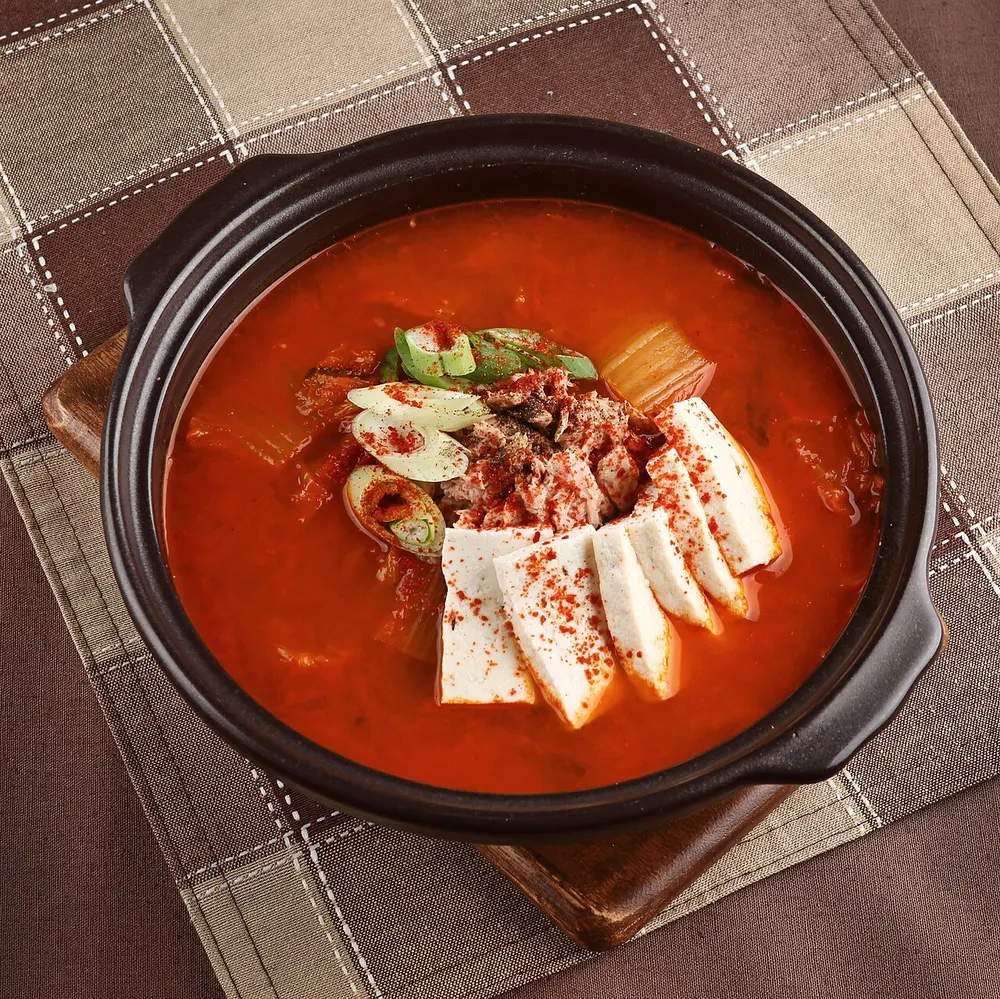
Kimchi Jjigae (Kimchi Stew)
Source: Traditional
30 min3420 kcal
Dairy-free🌶️🌶️
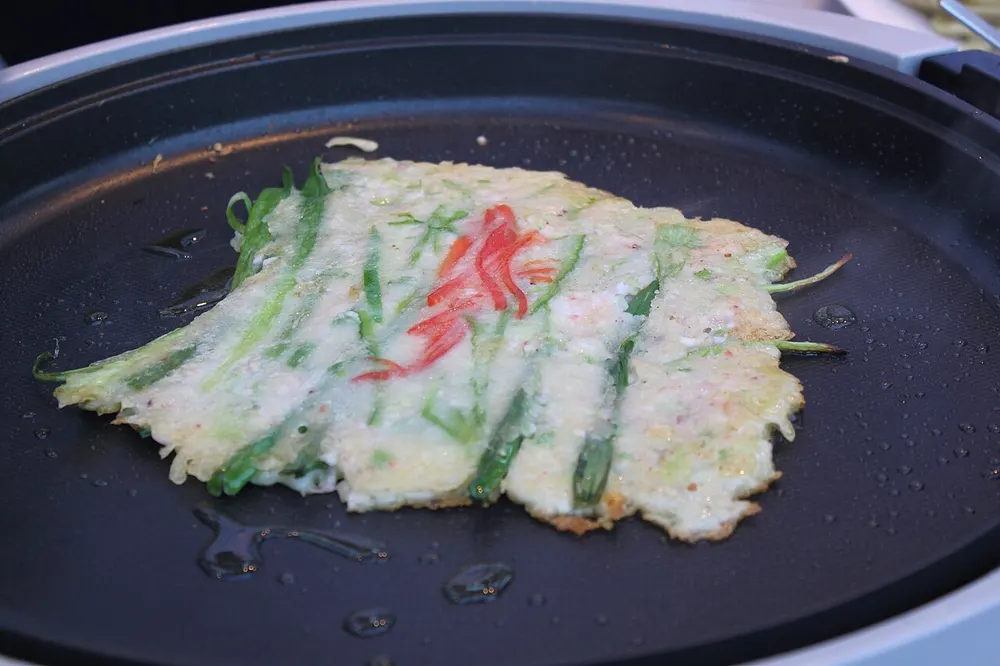
Pajeon for when the only onion in the house is the big kind: daepa quartered lengthways, bound with ground pork batter, and an egg poured over the top once the underside has set.
Source
Recipe by 백종원 · 👨🍳 Chef · Paik Jong-won — chef & restaurateur, 백종원의 요리비책
Names of cooks and creators appear as source credit only. More Recipes Please is independent and is not affiliated with, endorsed by, or sponsored by them.
Paik Jong-won (요리비책) — Published by Paik Jong-won on his own YouTube channel as '파전은 먹고 싶은데, 쪽파가 없다면?', with the full gram/ml table, his ten-step method with his own tips, and an official English translation in the description. Pajeon is normally made with thin jjokpa; his premise is that you have only the thick daepa, so it is quartered lengthways to lie flat and cook through. Ground pork goes raw into the batter, the scallions are kept pointing the same way so the pancake holds together, and the beaten egg is poured over the top only after the underside sets — finished with a blast of high heat for colour.
Cook: 백종원
Watch it being made · 3 videos
Quarter the green onions lengthways, then cut them into 3–4 lengths sized to the diameter of your frying pan.
💡 Splitting the stalk lengthways is what makes daepa work here at all. Whole, it is too thick and round to cook through and rolls out of the batter; quartered, it lies flat and turns sweet — which is his whole answer to having no jjokpa.
Slice the Cheongyang chili and red chili 0.3 cm thick on the diagonal, and set about a third of them aside for the garnish.
In a bowl combine the buchim-garu, water, minced garlic, seasoned salt, ground pork and black pepper, mixing evenly with chopsticks.
Beat the eggs lightly in a separate bowl and keep them by the stove.
💡 The egg is not part of the batter — it is poured over the pancake later. Mixing it in gives you a soft, cakey jeon; kept apart it sets into a distinct layer on top.
Add the green onion and the remaining chilies to the batter and turn them over gently, keeping all the scallion pointing the same way.
💡 Keeping the scallions aligned is his own written tip. Lined up, the pancake holds together as one sheet and tears into neat strips; tangled in every direction, it falls apart when you flip it.
Pour a generous amount of oil into the pan and warm it slightly over medium heat.
Lay the batter onto the pan, spreading it out neatly and flatly with the scallions still lying parallel.
💡 Spread it thin and flat and resist piling it up. A thick jeon steams in the middle and never crisps — the crunch comes from a thin layer sitting in plenty of oil.
When the underside has set — the edges look dry and lift cleanly from the pan — pour the beaten egg evenly over the top and lay the reserved chili slices on it.
If the pan is swimming in oil, blot some off with a paper towel before you turn it.
💡 His own tip, and a safety one: a pancake dropped into a deep pool of hot oil throws it straight back at you. Blot first, flip second.
Flip the pancake and cook it, turning back and forth as needed, until both faces are set and the pork is cooked through — about 3–4 minutes a side.
For the last 30 seconds turn the heat to high to colour it golden and crisp.
💡 This final blast is his finish and it is worth watching for. Medium heat cooks the jeon through but leaves it pale and soft; the last thirty seconds on high are what make the surface crisp.
Slide it onto a plate and serve hot — traditionally with makgeolli.
Korean
Source: Traditional
Korean
Source: Home cook
Korean
Source: Home cook
Korean
Source: Traditional
Made this? Share a photo in Showcase.
Share your creation →