Beginner
Korean
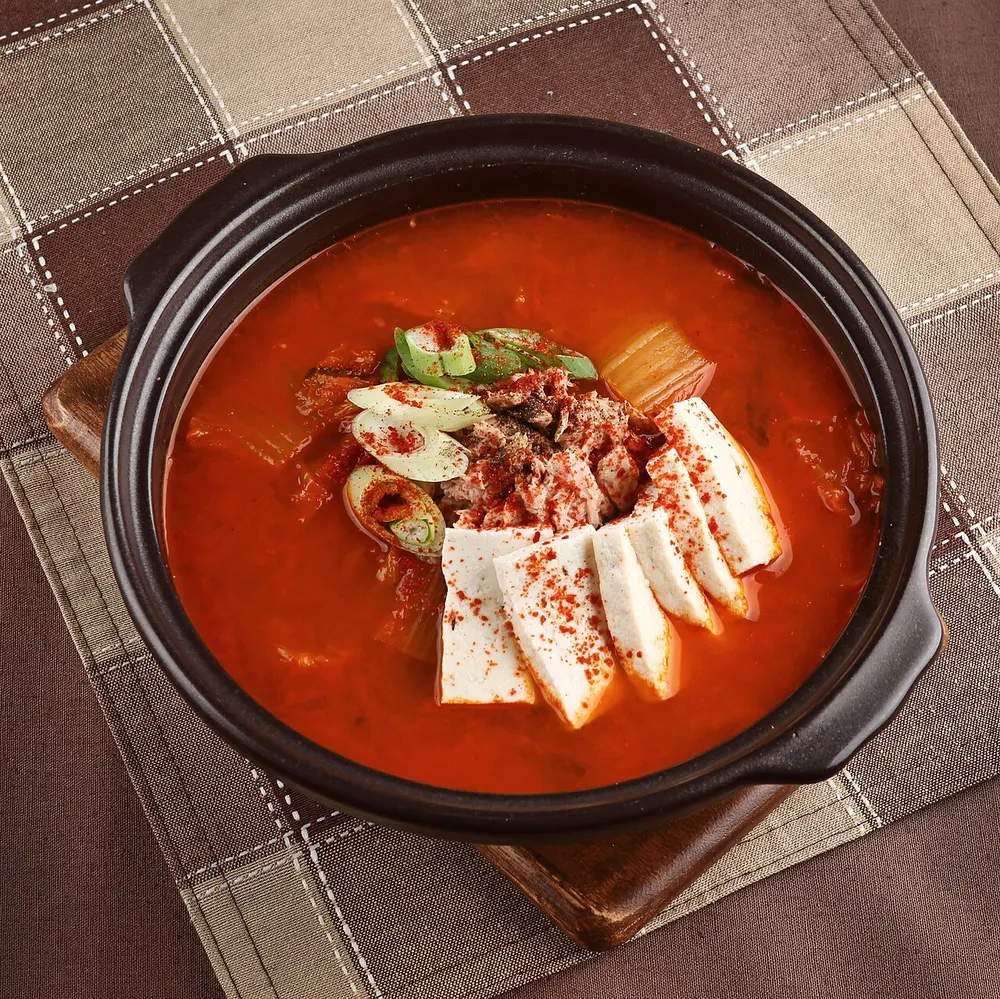
Kimchi Jjigae (Kimchi Stew)
Source: Traditional
30 min3420 kcal
Dairy-free🌶️🌶️
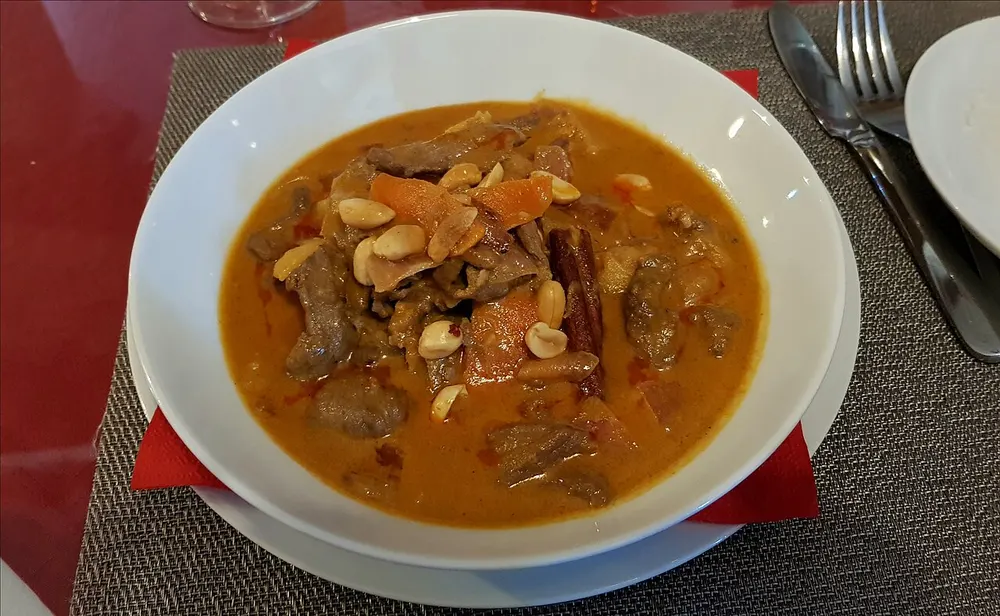
The one Thai curry built on dry roasted spices — cardamom, cinnamon, cloves, star anise — because it arrived with Muslim traders. Beef, potatoes and peanuts simmer for two hours until the sauce is thick, sweet-sour and barely hot at all.
Source
Recipe by Thai-Muslim kitchens · 🏺 Traditional · Muslim Thai cooking, descended from Persian and Indian traders at the Ayutthaya court and from the Muslim south
Thai-Muslim · traditional dish — An ownerless traditional dish, so no cook is credited — but its Muslim history is documented, not decorative. The cited article records that 'massaman' is a corruption of the Persian mosalmân, meaning Muslim, that mid-19th-century writers called it 'Mussulman curry', and that Thai scholars trace it to 17th-century Ayutthaya and to the Persian merchant Sheikh Ahmad Qomi, ancestor of the noble Bunnag family. It confirms the foreign dry spices — cardamom, cinnamon, cloves, star anise, cumin, bay — brought by Muslim traders, notes that pork is used but is rare because of those Muslim roots, records chicken as the most common protein with beef, duck, venison, mutton and goat as documented variations, and cites the late-18th-century poem attributed to Prince Itsarasunthon, later Rama II, praising the curry. CNNGo ranked it the world's most delicious food in 2011 and again in 2018. Quantities and method here are this book's own.
Watch it being made
Skim about 150 ml of thick cream off the top of the coconut milk and cook it in a heavy pot over medium heat until the oil separates out, 4–6 minutes.
Add the massaman paste and all the whole spices — cinnamon, cardamom, cloves, star anise, bay — and fry for 4 minutes until the kitchen smells more like a spice shop than a Thai kitchen.
💡 That smell is the honest signature of this curry. No other Thai curry uses this spice cabinet, and it is the direct trace of the traders who brought it.
Turn the beef in the paste until every side is sealed, then pour in the rest of the coconut milk and the water. Bring it up to a bare simmer, cover, and leave it for 90 minutes.
💡 Bare simmer means the surface trembles and one or two bubbles break. A boil will make the beef seize and the coconut milk split.
Add the potatoes, whole shallots and peanuts. Simmer uncovered for another 35–45 minutes, until a knife slides into the beef with no resistance and the sauce has reduced by about a third.
Season with the strained tamarind, palm sugar and fish sauce. Simmer 5 more minutes and taste — massaman should land sour-sweet-salty with warmth from the spices and almost no chilli burn.
💡 If it tastes flat, it almost always needs tamarind rather than salt. Sourness is what carries this curry.
Rest it off the heat for at least 20 minutes, or better, overnight in the fridge. Serve with jasmine rice, or with roti to tear and dip.
💡 This is one of the few Thai dishes that is genuinely better the next day — the spices need the time to settle into the sauce.
Korean
Source: Traditional
Korean
Source: Home cook
Korean
Source: Home cook
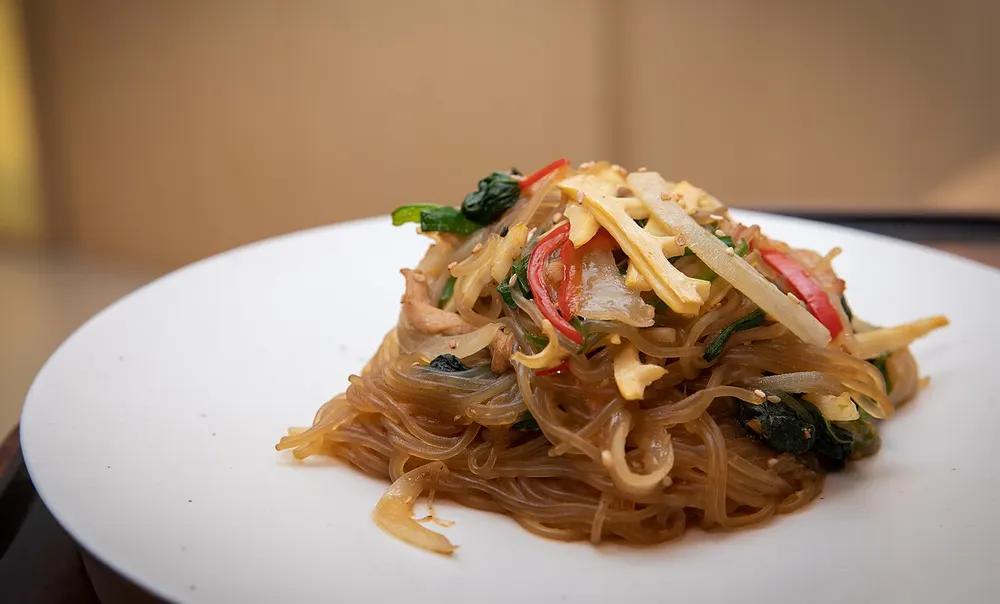
Korean
Source: Traditional
Made this? Share a photo in Showcase.
Share your creation →