Beginner
Korean
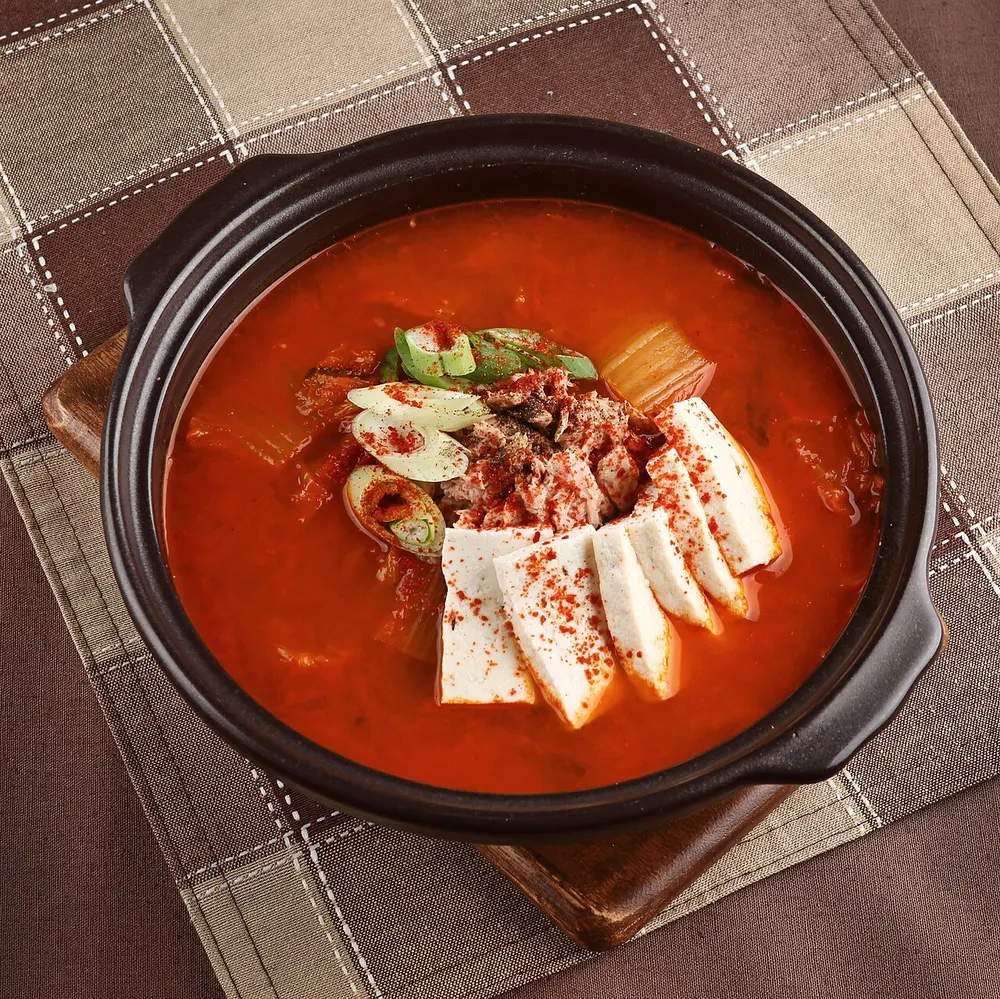
Kimchi Jjigae (Kimchi Stew)
Source: Traditional
30 min3420 kcal
Dairy-free🌶️🌶️
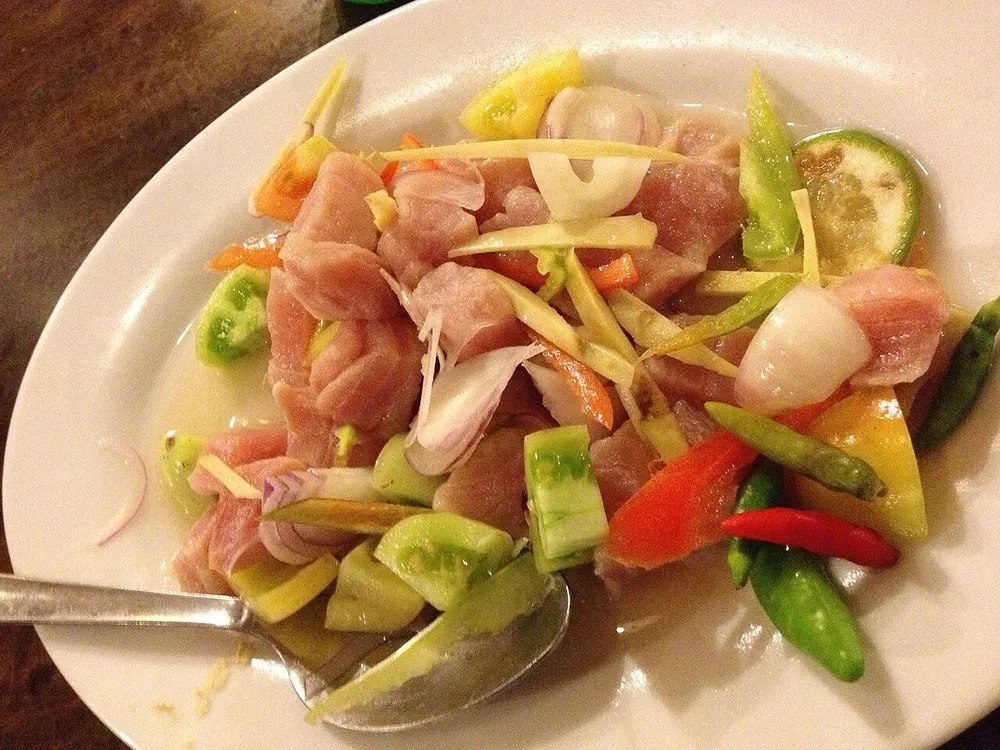
'To eat raw' — the Visayan way with the morning's catch. Cubes of fresh fish 'cooked' in coconut vinegar and calamansi with ginger, onion and chilli, ready in the time it takes the acid to turn the flesh opaque. Eaten first, with drinks, before anything cooked arrives.
Source
Recipe by Visayan home kitchens · 🏺 Traditional · The central islands — Cebu, Iloilo, Bohol — where the fish is eaten raw in vinegar the morning it lands and the soups run clearer and lighter than Manila's.
Visayas · 'to eat raw' — An ownerless regional dish, so no cook is credited. The cited article confirms kinilaw as a Visayan raw seafood preparation that denatures the fish with vinegar and acidic fruit juice, eaten as an appetizer or with drinks, and distinguishes it from the northern kilawin. The vinegar rinse, the timing cue, the coconut-milk option and the quantities are this book's own.
Watch it being made · 3 videos
Cut the fish into 2 cm cubes. Rinse with a splash of the vinegar, squeeze gently and pour that first vinegar away — it carries off the fishy surface.
💡 The first rinse is the step home cooks skip and restaurants never do. It is the difference between clean and fishy.
Mix the remaining vinegar with the calamansi, salt and pepper. Add the fish, ginger, onion and chillies and turn gently to coat.
Leave 10–15 minutes at room temperature, until the outside of each cube has turned opaque white but the centre is still translucent.
💡 Opaque outside, glassy inside. Longer and the acid cooks it through to a chalky texture — kinilaw is not ceviche left overnight.
Stir in the coconut milk, if using, and the spring onions.
Serve straight away, cold, with more chilli on the side.
Korean
Source: Traditional
Korean
Source: Home cook
Korean
Source: Home cook
Korean
Source: Traditional
Made this? Share a photo in Showcase.
Share your creation →