Beginner
Korean
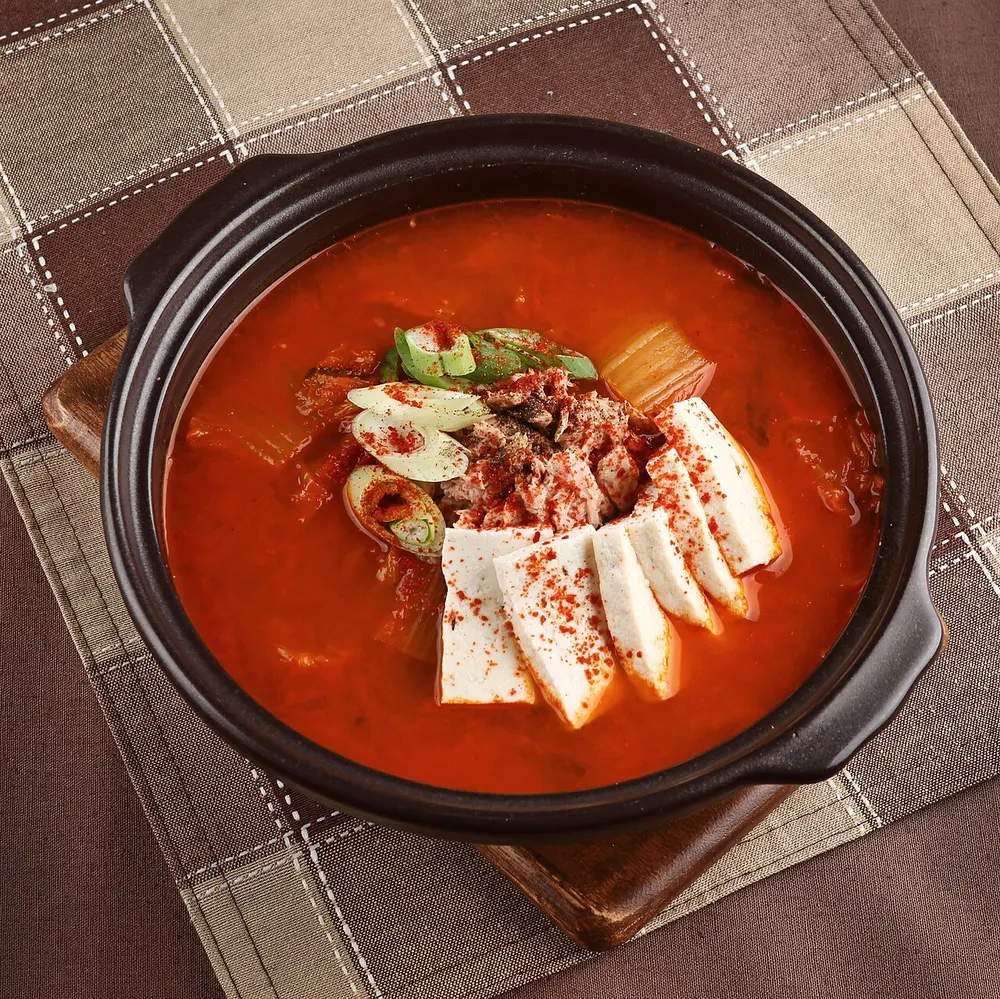
Kimchi Jjigae (Kimchi Stew)
Source: Traditional
30 min3420 kcal
Dairy-free🌶️🌶️
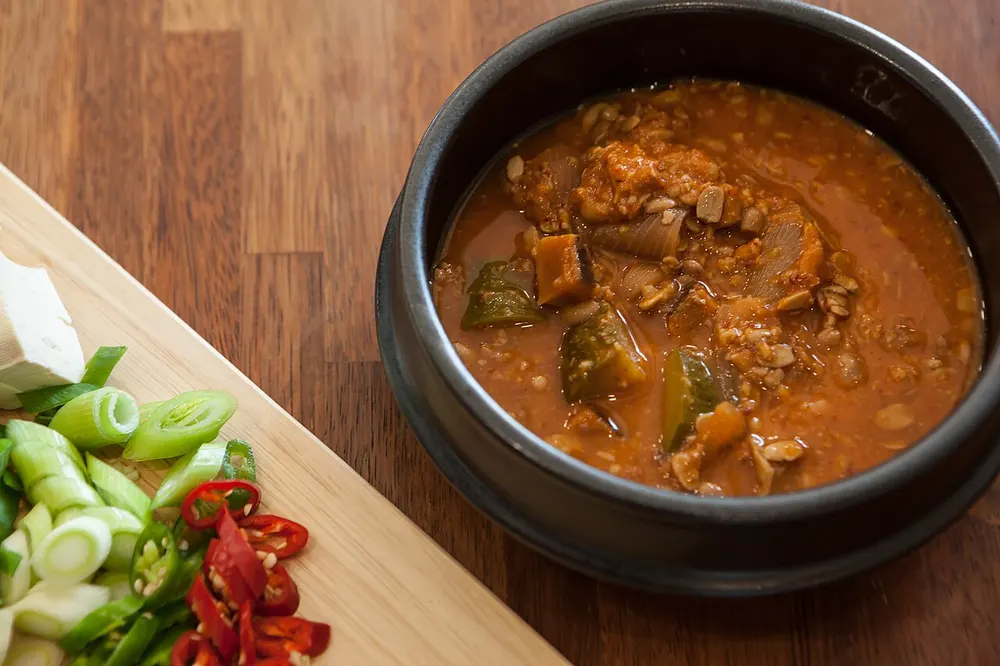
Doenjang-jjigae sized honestly for one person: everything diced small so it gives up its flavour in nine minutes, beef brisket rendered first for fat, and the doenjang fried before any water goes near it.
Source
Recipe by 1인분레시피 · 📱 Influencer · Korean YouTuber who cooks strictly for one: his channel bio describes it as "simple, tasty recipes tailored to one serving, for single-person households", and he publishes each ingredient list with amounts plus a numbered method
Names of cooks and creators appear as source credit only. More Recipes Please is independent and is not affiliated with, endorsed by, or sponsored by them.
Recipe published by 1인분레시피 — The creator publishes the full recipe — every amount, ten numbered steps and his own parenthetical tips — in this video's description. This is the least ambiguous serving count in the batch: his title is "1인분 우삼겹된장찌개 만들기", and his step 9 explains the portioning itself ("when you boil a single portion, choose the smallest, narrowest pot you can, or it reduces too fast"). The reasons given in the tips here — dicing small so the flavour comes out in the short cooking time, frying the garlic with the beef against any gamey smell, frying the gochugaru and doenjang before adding liquid — are his, restated in our words.
Cook: 1인분레시피
Watch it being made
Dice the onion small.
💡 His reason, and it is the key to the whole recipe: cut small and the ingredients give up their flavour into the broth in the little time a one-portion pot gets. A 4-person stew can simmer for 30 minutes; this one has 9.
Dice the potato SMALLER than the onion.
💡 Deliberate, not fussy. Potato is the densest thing in the pot and cooks slowest — cutting it smaller is how everything finishes at the same moment.
Dice the aehobak small as well, and slice the Cheongyang chili into thin rounds. Keep the chili separate — it goes in last.
Heat a small pot over medium, then fry the beef brisket together with the 1/4 tbsp of minced garlic to render the fat out.
💡 The garlic goes in WITH the beef, not after — his note says frying them together heads off any gamey smell from the brisket. You are also making the cooking fat for the next step; add no oil.
Fry until the surface of the beef has cooked through and a pool of clear fat has come out.
Add the 1 tbsp of gochugaru and the 1 tbsp of doenjang straight into that fat and fry them.
💡 This is his headline tip and it is worth obeying: frying gochugaru wakes up its savouriness, and frying doenjang cooks off the dull, heavy edge it otherwise leaves in a broth. Paste dropped into water instead just tastes muddy.
Fry for about 1 minute — the paste should smell toasted and nutty rather than raw, and the fat should have turned red.
💡 Watch it. Gochugaru scorches in seconds on a dry-ish pan, and burnt chili turns the whole pot bitter. If it looks close, go straight to the vegetables.
Tip in the diced onion, potato and aehobak, and turn them through the fried paste.
Pour in the 2 cups of rice-rinse water and bring it to a simmer over medium heat, then cook for 7 minutes.
Skim off the foam that rises in the first couple of minutes.
💡 His portioning note lives here: for a one-person pot, use the smallest, narrowest pot you own. A wide pan has too much surface area and 2 cups of liquid will boil away before the potato is done.
At 7 minutes, test the potato with a chopstick — it should go through with no resistance. That is the piece that decides whether the stew is ready.
Add the sliced Cheongyang chili and simmer 2 minutes more.
Taste and serve it bubbling, with rice. Doenjang brands differ a lot in saltiness, so check before you add anything.
💡 The chili goes in for the last 2 minutes only. Boil it from the start and it surrenders all its heat into the broth and turns to mush — late, it stays sharp and green-smelling.
Korean
Source: Traditional
Korean
Source: Home cook
Korean
Source: Home cook
Korean
Source: Traditional
Made this? Share a photo in Showcase.
Share your creation →